
The Marriage Allowance tax break explained

You could pay £252 less tax this year – and possibly backdate it for another four years.

The Marriage Allowance is a way to shift some of your tax-free allowance to your husband or wife if they are a low earner.

If you’ve been eligible for the current and past four years, you could claim back tax worth £1,260.

There are various conditions so it won’t be for everyone (including me), but it’s certainly worth taking a look at the criteria to see if you can claim.

Here’s how it works and what you need to know.

Who is eligible for the Marriage Allowance?

You need to be either married or in a civil partnership. 

The higher earner in the couple must earn less than £50,270 but more than £12,570 in the tax year you’re applying for. So right now, that’s 6 April 2025 to 5 April 2026.

In Scotland it’s a little different and income below £43,662 for the higher earner.

The lower earner in the couple must earn less than £12,570 in the same year. This is the basic rate threshold where you start paying income tax, though if you have a lower limit (for example because you underpaid tax a previous year) then that amount will apply.

You’re able to make a claim if you get a pension, as my parents did. But, if you or your partner were born before 6th April 1935 (anyone currently 90 years old and above), then you can choose instead to get the Married Couples Allowance.

How much money can you get?

The scheme allows the lower earner to transfer 10% of their tax-free allowance to the higher earner. So for this tax year, with the threshold at £12,570, you can move £1,257 of the allowance over. 

So let’s say the lower earner’s total income for the year is £10,000. By transferring 10% of their personal allowance to their spouse, their personal allowance drops to £11,313. But since they earn less than this, it doesn’t change the fact that they don’t pay any tax that year,

However, the higher earner now has an increased personal allowance of £13,827 before any tax is due. Since the basic rate of tax is 20% this will work out as paying £251.40 less tax in the year (20% of £1,257).

Of course, if one of you earns between £11,313 and £12,570, you won’t get the full benefit. That’s because the lower earner will now have to pay 20% on anything above £11,313.

You won’t be paid back any saved cash. Instead, the tax code of the higher earner will change, and they’ll just pay less tax throughout the year or on their own tax return if they’re self-employed.

Claiming Marriage Allowance for previous years

You can backdate your claim by four years alongside the current year. Usually the amount per year changes, though, since the tax thresholds have been frozen since 2021/22, the amount hasn’t actually changed since then. That means your claim is potentially worth up to £1,260 over the five years.

Any money from previous years will be sent to you via cheque so you’ll see the savings (almost) straight away.

You can also claim for a deceased partner if they’ve they were alive and you were both eligible during one or more of those tax years.

Here’s how to see if you were eligible and how much you could potentially claim for these previous years.

2024/25 Marriage Tax Allowance totals

The basic rate upper threshold was £50,270 in 2024/25 (£43,663 in Scotland), while the personal allowance was £12,570.

So the amount you could claim in England, Wales and Northern Ireland would be £252.

2023/24 Marriage Tax Allowance totals

The basic rate upper threshold was £50,270 in 2023/24 (£43,663 in Scotland), while the personal allowance was £12,570.

So the amount you could claim in England, Wales and Northern Ireland would be £252.

2022/23 Marriage Tax Allowance totals

The basic rate upper threshold was £50,270 in 2022/23 (£43,662 in Scotland), while the personal allowance was £12,570.

So the amount you could claim in England, Wales and Northern Ireland would be £252.

2021/22 Marriage Tax Allowance totals

The basic rate upper threshold was £50,270 in 2021/22 (£43,662 in Scotland), while the personal allowance was £12,570.

So the amount you could claim in England, Wales and Northern Ireland would be £252.

How to claim the Marriage Tax Allowance

It’s really simple. You head to the HMRC website or phone them on 0300 200 3300.

The lowest earner needs to be the one who applies, as it’s their allowance which will transfer over.

You’ll need both your National Insurance numbers, as well as one of the following ways to prove your identity:

  • the last 4 digits of the account that your child benefit, tax credits or pension is paid into
  • the last 4 digits of an account that pays you interest
  • details from your P60
  • details from any of your 3 most recent payslips
  • your passport number and expiry date

Once you’d made the initial claim, it’ll keep going each new financial year.

What if your situation changes?

If you or your partner’s income changes during the current year you are claiming for and you’re no longer eligible then you need to let HMRC know. You’ll still get the tax break for the rest of the year.

You also need to do this if your relationship ends through a divorce, dissolution or if you become legally separated. The claim could be backdated in this scenario which means you could owe tax.

Free and cheap magazines: tricks to save money

Don’t pay full price when you can get free or discounted magazine copies and subscriptions.

For about 20 years I subscribed to the film magazine Empire, but I’ve not paid at all in the last decade – thanks to different deals and hacks to get it, and other titles, for free. And if they don’t work, there are ways to pay less too.

Some articles on the site contain affiliate links, which provide a small commission to help fund our work. However, they won’t affect the price you pay or our editorial independence. Read more here.
Free magazines tricks

Free digital magazines and newspapers from your library

Libraries don’t just lend books and DVDs – you can also borrow digitally. As well as (non-Kindle) e-books, magazines and newspapers are available. The service will vary depending on your library, but for me I’ve got access to the Press Reader app.

You just need to join your local library, and many will let you do this from their website – even if you don’t have proof of residency. Others will require you to visit the library itself.

Once signed up you can access different magazines that can be downloaded to your tablet, phone or viewed on a computer. It doesn’t take much getting used to reading them on a tablet; an extra bonus is you can zoom in on any bits that are a little too small to read.

I’n the past I’ve regularly download Empire, Radio Times and Wallpaper for free, and my wife has chosen Vogue, Good Housekeeping and Newsweek – and there are dozens and dozens of other options.

Free magazine subscription via a Club Lloyds bank account

Every year with this bank account you have the choice of a free annual magazine subscription, six free cinema tickets or a year of Disney+ with Ads.

Though you’re limited to just one personal account, you can get another as a joint account. That means a couple could have three Club Lloyds accounts, and three freebies. So even if you prefer Disney+ as your first choice, you could easily add a magazine via one of your other accounts.

You do need to pay in £2,000 a month into the current account to avoid a £5 monthly fee, but you don’t have to keep the money in the account, nor does it need to be in one go. We’ve more details in our Club Lloyds review.

There’s also sometimes a switching bonus for Lloyds if you close an account at another bank and move everything over so it’s worth keeping an eye out for that.

Free magazines with the Club Lloyds bank account

The magazines available include (updated 29/7/25):

  • Best
  • Bike
  • Bird Watching
  • Car
  • Classic Cars
  • Cosmopolitan
  • Country Living
  • Country Walking
  • ELLE Decoration
  • ELLE
  • Empire
  • Esquire
  • Garden Answers
  • Good Housekeeping
  • Harper’s Bazaar
  • House Beautiful
  • Improve Your Coarse Fishing
  • Inside Soap
  • Landscape
  • Men’s Health
  • Modern Games
  • Mojo
  • Practical Classics
  • Prima
  • Red
  • Runner’s World
  • Spirit & Destiny
  • Steam Railway
  • Today’s Golfer
  • Trail
  • Women’s Health

Free online magazines with Amazon Prime

A less well-known feature that Amazon introduced for Prime members called Prime Reading. Here you get free access to a number of books and magazines.

The selection rotates each month so you won’t see the same titles featured every month, but there’s a decent mix to choose from. At the time of writing you can pick up 59 different magazines including Top Gear, Elle and Today’s Golfer.

You don’t need a Kindle to read them, in fact they work better if you use the Kindle app on your tablet.

Prime costs £8.99 a month or £95 a year, though you can get a free 30-day trial each year.

Cheap magazine subscription tricks

Try a multi-magazine digital subscription 

If you don’t have the RGB service at your library, you can try a couple of different Netlflix style services where you pay a monthly fee for unlimited access.

The two main ones are Readly and Magzter, and both have free or cheap trials to give them a go. Right now, Readly offers a two-month free trial, while it’s 7-days free at Magzter. Both have thousands of titles, many of them designed specifically for tablets making them a far more interactive read.

Once the trials end it’s a bit pricey at £12.99 and £14.99 a month respectively. However, it’s not bad value if you’d normally buy two or three magazines a month – and even better if you can split the subscription with friends or family. There are often more ways to save, so hunt for deals.

Featured switching deal
Sponsored
Customer rating 4/5
  • Switch bonus
    £180
  • Offer ends
    Unknown
  • FSCS Protected? Yes
  • Switch bonus requirements Switch using the Current Account Switch Service and close your old account within 60 days of starting the switch
  • Deposit requirements Deposit £1,500 in the first 60 days from opening the account
  • Direct debits transferred over Set up two Direct Debits before or after the switch from a selected list of household bills
  • Existing customers? Can't have held any Santander current account on 1 January 2025
  • Restrictions Can't have received a switching bonus from Santander already, offer limited to once per person
  • Eligible accounts Open a new or hold an existing Everyday, Edge, Edge Up or Edge Explorer current account

Buy a cut-price subscription online

If print is more your thing, please don’t pay full price for a subscription. You’ll almost always be able to find a cheaper deal online.

If you have Tesco Clubcard vouchers, you can exchange 50p in points for £1 to spend on a variety of titles.

Sites such as Great Magazines and iSubscribe offer money off full price, though you’re unlikely to get more than 40% off. Occasionally you can also get a free voucher (eg Amazon or Ticketmaster) with a reduced subscription.

Check cashback sites too, as they may have bonuses for orders. And if you’re not already a TopCashback or Quidco member, make sure you sign up via our links for up to £20 extra back on top.

Check for deals

From time to time there are other special offers to help you save, and we’ll share significant ones in our magazines and newspaper deals page. Recent examples have included a huge stack of deals on Which? and £1 a month deals for The Athletic.

Haggle for trials and discounts

Finally, if you’re already paying for a magazine, don’t just auto-renew. As with many other bills, call up to cancel to see what they’ll offer. Turn down their initial deal, and see if they can get prices down even more.

And if you don’t have a current subscription, you can still haggle. In the past I was constantly called by the Empire sales team as a former subscriber. At one point I got 12 issues for less than £10!

Or you can contact the magazine publisher direct. Go to their website to find the number and see what you can get.

Just make sure you cancel before the full Direct Debit starts.

Is your holiday protected?

You need to make sure you’re covered in case something goes wrong before or when you go away.

Whether you book your holiday through a travel agent or do it yourself, things can always wrong. Hopefully they won’t but if they do, there’s every chance you’ll lose your money.

That is unless you do the following. Though there are always complications, it’s better to have as many protections in place to help you get any lost money back or reschedule your trip with limited, if any, extra costs.

Some articles on the site contain affiliate links, which provide a small commission to help fund our work. However, they won’t affect the price you pay or our editorial independence. Read more here.

Book your insurance

It’s so important you book travel insurance, and you should do it as soon as you book your holiday, too. That’s because it’s not just about cover while you are away, you’re also partly paying for cover in case you can’t go on your trip.

You could break your leg, have a close relative pass away or see your airline collapse – all of which could prevent you from travelling. But with insurance in place you should be covered to get your money back.

Having the insurance when you’ve booked will also help if the Foreign and Commonwealth Office (FCO) later declares a destination as unsafe to visit. And this isn’t just about obvious danger zones like war zones. During the height of the pandemic many countries were off limits. You can see the latest list of places with warnings here.

A few more quick things on travel insurance.

Do read the policy documents to check exactly what you’re covered for. A few years ago I wasn’t covered for coming back early from the USA when I hurt my back as this was categorised as curtailment – and only unused costs were covered, not new costs. So though my original flight home was refunded, the more expensive earlier flight I did take, wasn’t.

Check for cover for things like natural disasters (remember the ash from the Icelandic volcano) and pandemics too – these could be excluded. It’s worth paying a little more for this cover.

In fact, lots of people might think they are covered by a policy that comes with their bank account. You might be, but check those extra terms and conditions to be sure.

In addition, you must declare any pre-existing medical conditions. If you get ill and the insurance company discovers you didn’t declare you’ve had treatment – even if it’s not for the thing you’re ill with on holiday – they will likely reject your claim. It can be more expensive to find a policy if you have been ill before, but it really is worth getting the right one.

And if you’re going to take two or more trips in a year, annual insurance could work out more cost-effective. The problem you get here is do you need to get just European cover, or are you likely to go worldwide. If there’s a strong chance of the latter then make sure you get cover for this. And don’t forget things like winter sports too if you’re going to be getting involved in those kinds of activities.

Look for extra legal protections such as ATOL and ABTA

Though I tend to book everything myself, if you’re looking at a simple holiday, packages can be the easiest way to book – and they can come with added protection.

The biggest of these is ATOL. If you’ve bought your hotel and your flight – whether as a package from a travel agent or since the 1st of July 2018 from the same website at the same time (e.g. Expedia) – then you will have ATOL protection.

With ATOL, the big benefit is if something goes bust – whether with the hotel, flight or tour operator – then you will either get your money back before you go, or you will be flown home if already abroad (though as we saw with the Thomas Cook collapse in 2019, that’s not always straightforward).

So it’s important to look for ATOL certification when booking, and you can check it’s the real thing via the Civil Aviation Authority website.

Package holidays also give you consumer rights if the holiday isn’t what you expected – say there was constant building work you weren’t told about. You can claim compensation.

Now if your holiday doesn’t involve a flight, say it’s a cruise or a coach tour, look for ABTA membership as you’ll get support if something goes wrong. Again you can check the ABTA membership is the real thing, this time on the ABTA website.

Of course you don’t get ATOL if you book the flights and hotels separately from different companies, so it’s worth making sure your travel insurance covers things like airline failure and consequential losses.

However, although it’s not defined as a package, if you bought your flights and hotel from the same website or travel agent within 24 hours but in separate transactions you can also claim money back if one of the providers goes under.

Pay with a credit card

Whether it’s a package or a DIY holiday, if any part of it costs more than £100, pay for it with a credit card. Do this and if there’s a problem, such as the hotel going bust, then the credit card company is equally liable for any losses you make. This is thanks to something called Section 75 of the Consumer Credit Act.

But there are two things to keep in mind. First, the £100 minimum relates to each individual item purchased. So let’s say you are buying two single flights. If one is £120 and one is £70, it could be that only the first flight gets this cover – even if you brought them from the same operator at the same time. However, if it’s a return flight at £190 then both are covered.

Secondly, this is only if you have a direct relationship with the provider. So buy EasyJet flights from EasyJet then yes, you get this protection. But buy them from a third party such as Lastminute.com then you won’t.

And of course, with credit cards, make sure you can clear that debt each month before interest charges are added.

Get a GHIC

The Global Health Insurance Card is essential if you are going to Europe this summer, and replaces the previous EHIC that ended under the Brexit aggreement.

With a GHIC you can access the same health care as locals at the same price they pay, which isn’t necessarily free. But without one it could cost you a fortune – and most travel insurance policies require you to have one too or they could reject any claim you make.

These are free – so don’t fall for dodgy websites charging you to get one. Instead go via the NHS website.

How to refill your water bottle for free

Reuse and refill to save money with a handy app.

There’s no need to keep buying water when you’re thirsty thanks to a scheme that will let you top up at local shops and businesses.

Some articles on the site contain affiliate links, which provide a small commission to help fund our work. However, they won’t affect the price you pay or our editorial independence. Read more here.

Though the summer is taking a while to get going yet this year (and rain is always around the corner) there have been some been fantastically sunny and hot days in the last month. And that means it’s more important than normal to keep hydrated when out and about.

Yes, a chilled coke can be good, and apparently, a hot drink will help lower your body temperature. But personally I’ll always prefer to have a nice cold water.

But buying bottled water isn’t always cheap. Yes, you can pick up a chilled own-brand 500ml bottle from supermarkets for around 70p, but that’s way more than it would have cost a few years ago. And you’ll be paying way over £1 at coffee shops and corner shops.

For those still commuting to the office, buying just two bottles a day during a working week could easily cost £10, if not more.

And it’s not good for the environment either. The organisation City to Sea estimates that UK households buy 480 plastic bottles a year, and only half get recycled. So it’s better for both your wallet and your conscious is to reuse either a “single-use” bottle, or buy a tougher one designed to be used again and again.

But if you’re not at home or work with access to a tap, where do you top up your bottle? Well, I’ve got some info to help you find out where you can hand over your bottle and get it refilled up for nothing.

Look for the Refill symbol

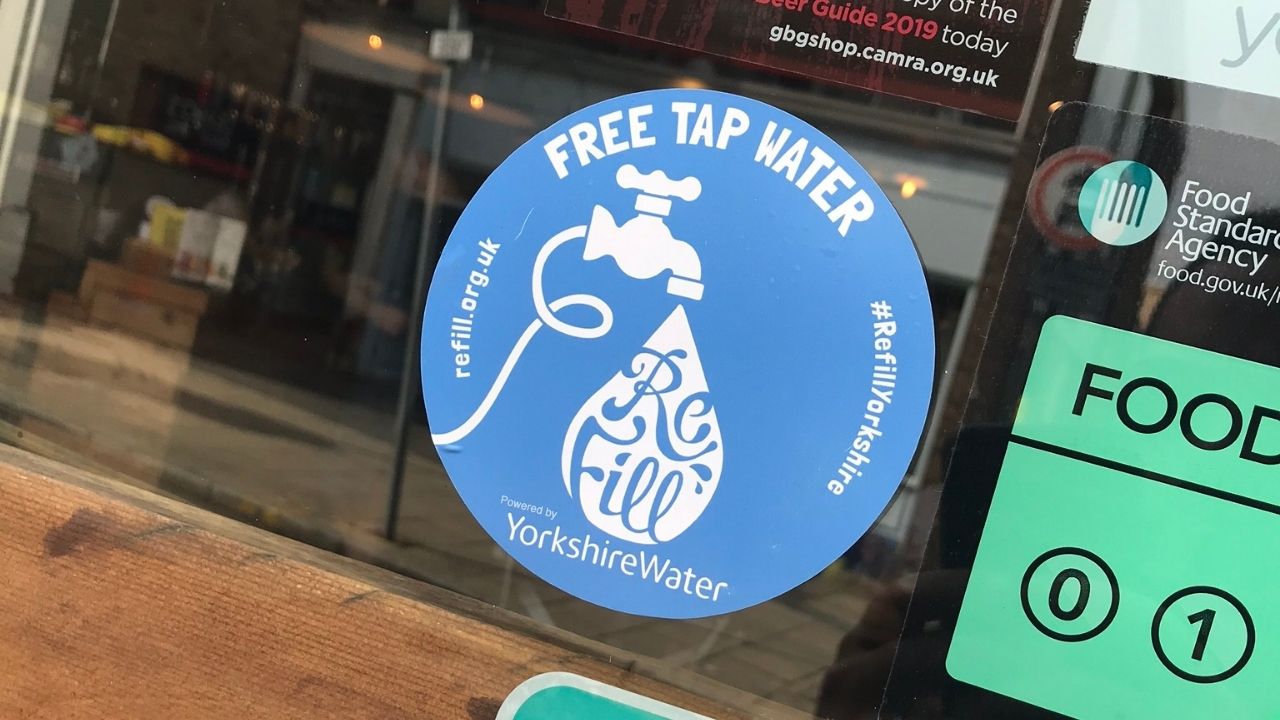
In recent years I’ve spotted more and more of the Refill logo in the windows and doors of cafes, pubs and even places like gyms. 

This logo means you’ll be able to get a refill of your water bottle for absolutely nothing. You can also plan in advance by downloading the Refill app which has a searchable map.

There are apparently over 330,000 businesses operating as “Refill Stations” in the UK, including brands such as Costa, McDonalds, Starbucks and Greggs.

Look for this Refill logo to get free water

Restaurants and bars – your rights

Of course, not everywhere will have the logo – but that doesn’t mean you can’t get free water. It’s always worth asking places if they’ll top up your bottle, though it’s always better to do this if you’ve been a customer. 

Though spending money doesn’t mean you are entitled to free water. Restaurants and cafes don’t even have to give you free water with your meal unless they are licensed premises.

If they do serve booze then they must have it available, but they can charge for service if they wish. And it doesn’t mean it’ll be very good tap water. I’ve eaten in places where the water is not great at all, and not even that cold. Still, it can help keep costs down.

Find public fountains

The Refill app also has an option to help you locate public fountains.

Filling up at airports

Though you can’t take liquids over 100ml with you then you go airside (though that might be changing), you can bring empty bottles. You should then be able to fill up your water bottles once you’re through security.

Not all airports have fountains, and they’re not always easy to find, but I’ve usually managed to bring a bottle or two through to ensure I can stay hydrated on long-haul flights, and avoid the sky-high charges you get on budget airlines.

Money Saving Expert has a useful list of airports which have fountains and where to find them.

National Art Pass deals and offers

This card gives you free or reduced entry to galleries and museums.

If you’re an art or museum lover, you’ll know it can be expensive to see all the major exhibitions, especially in London. The National Art Pass is a pretty good way to indulge your hobby for less.

Some articles on the site contain affiliate links, which provide a small commission to help fund our work. However, they won’t affect the price you pay or our editorial independence. Read more here.

Wording that says 'National Art Pass' with the Be clever with your cash logo on a blue background.

How much is a National Art Pass?

It’ll cost you £83 for the year, reduced to £62.25 if you pay by Direct Debit. Buy a Double membership and it’s £124 a year or £93 via Direct Debit.

Is it any good?

The bigger galleries and museums will probably offer you 50% off with the pass, while smaller ones might give you free entry.

Andy had one before and didn’t quite use it enough. But if you frequently visit galleries and museums, it’s well worth considering.

Where can you use it?

There are hundred of places – from the National Gallery to Tate Liverpool to HMS Belfast. You can search for your favourites or places near you on the National Art Pass website.

National Art Pass deals

3 months for £15

It’s unusual to get a pass for less than a year, so if you want to try it out, then you can currently get a discount for three months. It costs £15 for three months and add a plus one for £5.

This runs until 30 June 2025.

Under 30s discount

If you’re aged under 30 years old you can get an annual pass for £50. (Or £37.50 if you pay by Direct Debit).

You can buy this at any time before you hit 30. So if you’re 29 and your birthday is tomorrow you’ll still get the full discounted membership for a year.

Student Art Pass for £10

You can buy a Student Art Pass for £10. You need to be over 18 and studying full-time at a UK university or college. You’ll need to prove your eligibility with a uni email address.

It’s worth trying the code TAKE20 for an extra 20% off.

Club Lloyds review

With free cinema tickets and up to 6.25% interest on savings, is it worth opening this current account with Lloyds?

Regular readers will know I’ve got a lot of current accounts as I like to take advantage of the offers and benefits they each provide. But you don’t need to have as many as me – you’ll be fine with three or four.

So how do you decide which ones to go for? The Club Lloyds account is definitely a contender right now thanks to a choice of free cinema tickets, Disney+ or magazines. Plus, there are regular switching offers worth around £175.

Here’s what you need to know about the account.

What is Club Lloyds?

Club Lloyds is a current account from Lloyds Bank with some extra benefits over the standard classic account. It comes with a fee – though you can easily avoid paying it.

If you are going to get an account with Lloyds, this is the one you’ll get the best value from.

How much does Club Lloyds cost?

It’s not a free account. There’s a monthly £5 fee (increased from £3 on 2 June 2025).

However, if you pay in £2,000 every month you will get that £5 refunded. £2,000 a month is roughly what you’d get paid if you earn £30,000 a year (not including pensions or other contributions).

That means it’s affordable for most people, which means there’s really no reason why you should pay the monthly fee.

Top Tip

You don’t have to keep the £2,000 in the account if you don’t want to. When you get paid you can transfer the cash in and then transfer it back out to another account.

You can even do it in smaller amounts, four lots of £500 for example.

Here’s more about how I find extra Direct Debits and pay minimum amounts into multiple current accounts each month.

Can you get a switching bonus?

Lloyds regularly offers switching bonuses between £100 and £175 for the Club Lloyds and Club Lloyds Platinum accounts. There tend to be three or four a year.

New and existing customers are usually able to claim the offer if they open a new account and switch to it from a different bank. I’ve shared more details on the latest offer over on this page.

Club Lloyds Lifestyle benefits

When you open up a Club Lloyds account you can claim a free gift each year.  You get to choose from four different ‘Lifestyle Benefits’. 

You need to select your choice within 30 days of opening the account and this gift remains fixed for 12 months. You can swap to a different benefit once that period ends, or stick with the same offer.

There’s also the ability to earn up to 3% interest on savings, access a 6.25% monthly saver and get cashback on some purchases.

Free cinema tickets

You can select six tickets to use at either Odeon or Vue. You’ll get all six tickets at the start of the year and they’re valid for 12 months.

These tickets are valid for 2D and 3D showings. At Vue you can also use them at VIP or Xtreme screenings. Odeon will let you use them for Premier or recliner seats and some Luxe screens. You can’t use them at the BFI Imax, Odeon Luxe & Dine or screen 1 at the Odeon Luxe Leicester Square.

Though technically you can’t use them with another offer, I’ve seen them combined with things like Meerkat Movies – doubling your saving. 

They can be used any day of the week – so they’re probably best to save for expensive days like weekends, if you want to see a movie in 3D or at pricier upgraded locations.

Free Disney+

Alternatively you can choose a year of Disney+ with Ads, the streaming service with Disney, Marvel, Fox and Star Wars content. This is worth £59.88 a year.

You aren’t able to upgrade to a Standard or Premium tier without adverts or additional features.

Free magazine subscription

There’s a decent choice of 29 print or digital titles available. All are Hearst Magazine or Bauer Media publications (full list below). You won’t get the first issue for up to eight weeks which can making it a challenge to know when to stop buying copies if it’s something you already read.

Club Lloyds magazine choices (print or digital)

  • Bike
  • Bird Watching
  • Car
  • Classic Cars
  • Cosmopolitan
  • Country Living
  • Country Walking
  • ELLE Decoration
  • ELLE
  • Empire
  • Esquire
  • Garden Answers
  • Good Housekeeping
  • Harper’s Bazaar
  • House Beautiful
  • Improve Your Coarse Fishing
  • Landscape
  • Men’s Health
  • Modern Games
  • Mojo
  • Practical Classics
  • Prima
  • Red
  • Runner’s World
  • Spirit & Destiny
  • Steam Railway
  • Today’s Golfer
  • Trail
  • Women’s Health

Free Gourmet Society membership

This restaurant discount card will give you 25% off your bills, including drinks at selected restaurants. There are also extra discounts available like cinema tickets, theme parks and movie rentals.

Which freebies are the best value for money?

Here’s a quick summary of how much it would cost you to buy those freebies yourself:

The value of the cinema tickets freebies depends on where you live as tickets can really vary in price. I’d say it’s within a range of £30 to £90. But if you choose to go for 3D and VIP seats then they could easily be worth more than £100.

Disney+ with Ads is £4.99 a month, so its worth just under £60. Though this saving assumes you’ll actually watch Disney+ every month. If you have other streaming services it makes sense to mix and match over the year, paying only for ones you’re actually watching.

The magazine value obviously depends on which title you get and how many issues there are a year (e.g. Esquire has only six issues). But to give you an idea, a year’s subscription to Empire is currently discounted to £59.99 via Great Magazines.

The Gourmet Society membership could cost you as much as £79.99 a year, but it’s easy to find offers reducing it to £35 for a year.

Which lifestyle benefit should you choose? 

Andy’s Analysis

Ultimately it comes down to which one you’ll actually use – and how much you’d spend on it.

It’s possible to save money on tickets most days, but it is harder to get discounts on weekends or for posh seats. So if you go to the cinema at least six times a year (or three times if you’re a couple), it’s likely this is the best option.

Or if you know you’ll have Disney+ all year around, no matter what, picking that is a locked in saving.

Club Lloyds savings rates

You can earn interest on money held in the account and in a separate regular saver.

6.25% Monthly Saver

Pick of the bunch is a monthly saver that’s exclusive to Club Lloyds customers. This offers 6.25% and you can pay in between £25 and £400 a month. 

The 6.25% is fixed for 12 months when the interest is paid and the savings account closed. It’s really easy to open this via your account. I did it via the app. You can’t access the money More details here.

You can also open a standard Lloyds Monthly Saver if you have more to put away. This has a lower rate of 5.25% and the max you can add it £250 a month.

Up to 3% interest in your account

There’s also some in-account interest. To get it you must pay out two direct debits every month.

For the first £3,999 you hold in your actual current account you’ll get 1.5% interest. Then you’ll get 3% on the next £1,000. So if you always have £5,000 in your account you’ll earn the equivalent of just under 2%.

Linked 3.25% Advantage Savers

You also get access to an ISA or normal savings account paying 3.25% – as long as you make three or less withdrawals in a year.

Is Club Lloyds worth it for the interest?

The monthly savings account is a great option, especially since it’s fixed for a year. But the in-account interest and other ‘Advantage’ savers can be easily beaten by savings rates elsewhere.

Other Club Lloyds perks & features

Free spending overseas

You can use your card abroad for spending and cash withdrawals without any charge. That means it’s a decent pick for your holidays, though a handful of alternatives will earn you cashback on top.

Club Lloyds overdraft

With a Club Lloyds account, you get a £100 interest-free overdraft. Beyond this you’ll pay 39.9%. Here’s more on your alternatives.

Cashback on purchases

All Lloyds accounts also give you access to Everyday Offers, worth up to 15% off when using your debit card.

You will be offered retailers based on your spending and will need to activate them before spending. I’ve only really used this for LNER trains, otherwise my experience of these offers with other banks, is that it’s very hit and miss. Plus the deals are often available elsewhere. 

But it’s worth checking to see what you are offered. And where these do work is that you can use them in combination with cashback site savings.

Our podcast

Listen to Cash Chats, our award-winning podcast, presented by Steve Alderton and Editor James Andrews.

Episodes every Monday.

Lloyds app

The app is effectively the same one as Halifax, and it’s relatively easy to use. In fact, it’s one of my favourite ones outside Starling, Monzo and Chase. If you want to see how it compares to apps from other banks, check out this guide.

Here are some of the features worth knowing about:

Account details and management

An important feature for me is the ability to copy and share account details from the app – and Lloyds let you do this. You can also amend your address.

Card details and controls

You can see your PIN, long card number, expiry date and security code in the app. You can also copy the long card number to paste into online shops.

There are a handful of controls too. You can set your own contactless limit and freeze the card for a handful of reasons (overseas, online, in person, gambling and contactless).

Cheque payments

Lloyds is one of a handful of apps that lets you pay in cheques via the app. More info on how this works here.

Save the change

This is available to all Lloyds current accounts and it’s pretty cool. You may have seen it already via digital banks such as Monzo.

The idea is every time you spend money with your debit card the bank will top up the amount to the nearest quid from your account, and move it to a separate savings account.

So, say you spend £2.80, an extra 20p will be taken from your account. It’s a nice way to automate your savings and put money away without any effort.

You do need to activate the feature so it won’t happen unless you give permission. 

However you won’t be earning any interest on this money so I’d get in the habit of transferring it across to a better paying account on a regular basis – which kind of defeats the purpose of making it something that happens without you doing anything.

Budgeting and tracking

It’s relatively limited but you can see where your spending goes via a spending insights option. You’re able to view upcoming payments, to help you ensure there’s enough money in your account.

As with more and more apps, you’ll get notifications of spending and money coming in via the app.

Subscription Monitoring gives you the ability to cancel subscriptions within the app. You’ll also be told when subscriptions are due to end. It’s a handy way to avoid overpaying for services you don’t use or stopping subscriptions where it’s a nightmare to get through to someone on the phone. But it’s not a reason to get the account.

Multiple account hack

You’re only allowed one personal Club Lloyds account, but you can get another as a joint account. That means if you’re in a couple, between you there are three accounts up for grabs, and three ‘lifestyle benefits’. You can only get one Club Lloyds Monthly Saver each though, not a third joint one.

Summary – should you get it?

Club Lloyds Current Account

Rewards‘Lifestyle Benefit’ giving you a choice of 6 free cinema tickets, Disney+, a magazine subscription or Gourmet Society membership

Limited cashback
Monthly Saver6.25% AER up to £400 a month (must apply separately)
Interest on savings1.5% on balances between £1 and £3,000; 3% on balances between £4,000 and £5,000
OverseasFee-free spending and cash withdrawals abroad
Fee£5 a month (£0 if you pay in £2,000 a month)
RequirementsThe account requires two active monthly Direct Debits to earn interest
Overdraft£100 interest-free buffer

Then 39.9%

Andy’s Analysis – Is Club Lloyds a good account?

The Club Lloyds account is a decent all-rounder. Not the best reward, best interest rate or best banking app. But all are still better than what you’d get from most accounts. If you already have it, I’d keep hold of it.

Personally, I think you should open one up as a spare account rather than a main account. It’s always useful to have another account as a backup, and you can claim the lifestyle rewards even if this isn’t your main account.

And you can get that freebie year after year for free as long as you transfer in £2,000 a month – which is easy to do. The same goes for the monthly saver.

But should you switch from another bank to get it? Well if there’s a switching bonus then it’s definitely worth it. But if not, then no, I wouldn’t switch. There are better accounts out there to priotitise, including some offering an incentive to switch.

Should you ditch the TV Licence?

With so much quality TV now online from the likes of Netflix and Disney, I’ve taken a look into whether paying for the BBC represents good value for money.

It’s been announced that in April 2025, the TV Licence is increasing by £5 a year, with the annual cost set to be £174.50.

This is the first inflation linked increase in three years, and that’ll continue until 2027. However, it won’t reverse years of underfunding thanks to zero or below inflation hikes, which led to budget cuts – and many would argue a lowering of quality in BBC output.

For some, this latest increase means they’ll advocate for people to cancel their TV Licence now rather than pay more. I’ve shared in this article who needs to have one and who doesn’t.

However for me, the big question isn’t how to ditch the licence fee, but should you?

Some articles on the site contain affiliate links, which provide a small commission to help fund our work. However, they won’t affect the price you pay or our editorial independence. Read more here.

Who needs a TV Licence

Here’s when you need a TV Licence:

  • If you watch any live TV
  • If you record any TV
  • If you watch BBC TV on iPlayer, no matter the device (eg on your phone, games console, TV etc)

Despite more and more of us using streaming services, this is still pretty much most TV viewing.

So realistically the only way you’re eligible to avoid the licence fee is if you only watch online streaming or catch up services (not including iPlayer), and if you never watch or record broadcast TV.

Now if that’s the case, then you don’t have to pay, and I’ve shared further down how you can cancel your TV Licence.

Over 75s

A rule change a few years ago meant not all over 75s get a free TV Licence. However, many will still be able to claim one as long as they already receive pension credit. Here’s more information on the TV Licensing website.

Before we start

Everyone has an opinion about the BBC, especially the news output which those on the right say is too left wing and those on the left say is too right wing. We’re going to put that aside for this analysis and focus just on what you get for the money you pay.

I also want to put my cards on the table here at the start. When I was five or six, I declared that I wanted to work for the BBC when I was older. And I did. From 22 to 33 years old I worked all over the Beeb, before leaving to start up Be Clever With Your Cash. So it’s important to me.

Though it’s certainly not perfect (what large organisation is?). I do believe we’re better off as a country with the BBC than without. And that will obviously inform on my analysis below.

But it’s more than a decade since I left the broadcaster, and so much has changed in that time – not just at the BBC, but also how we consume our media – which goes for me too.

And the cost of living crisis has made every penny we spend so much more important, making value for money as a licence fee payer something that really does need interrogating.

What I watch

So do I get value from BBC TV? Over the last few years my TV viewing has changed drastically. Many of my favourite dramas and comedies can be found on Netflix, Sky Atlantic and Disney+.

Yet I do still watch plenty of excellent normal TV, mainly BBC and Channel 4 (you need a TV Licence to watch or record any live TV). In fact some of the best shows I’ve watched over the last year have been on these channels.

Happy Valley, Ghosts, Traitors, Race Across the World, Match of the Day, Wimbledon, Ludwig and Outlaws (all BBC), through to It’s a Sin, The Great British Bake Off and The Handmaid’s Tale (all C4). And there are plenty of great older shows available on-demand too, such as classic Attenborough, Motherland, His Dark Materials, Peaky Blinders, The IT Crowd and The Bridge.

And I’m not alone. Most TV viewing is of a free to watch channel, whether that’s via Freeview or Sky. And the most-watched shows every year are on the BBC, ITV and Channel 4. Even big import TV shows like Game of Thrones or Stranger Things haven’t come close.

Still, £175 every year is a lot of money. And there are some cheaper alternatives with very good programmes.

How the TV Licence cost compares to other media services

If you pay for the TV Licence monthly at the new price it’ll work out as £14.54 a month.

It’s far cheaper than paying for TV via Sky or Virgin, where you’re looking at at least double that amount every month, and potentially as much as £100.

Elsewhere we’ve seen a number of streaming services hike prices, closing the gap to the licence fee.

Sky’s “on-demand” service NOW is £9.99 a month for the Entertainment channels (not movies or sport), or £119.88 a year – though there are deals to get this even cheaper, often half the price. But if you want HD and to ditch adverts you’ll pay another £6 to £9 each month.

Amazon Prime now comes in at £95 for the year, which is £7.92 a month (and streaming only is available at £5.99 a month) – though you’ll need to pay extra if you don’t want adverts.

After clamping down on sharing, Netflix starts at £5.99 a month (with adverts), but the most popular package is £12.99 a month, working out at £15588 a year. You can pay more, at £18.99 a month for the top tier

Disney revamped prices in October 2024, so you’ll pay either £4.99, £8.99 or £12.99 a month, while Apple TV+ also increased monthly costs (again) to £8.99 a month.

And there are others like Paramount+ (£4.99 with ads, £7.99 or £10.99 a month without adverts), while you can pay for extra content and no adverts via ITVx (£5.99 a month).

So on the whole, though there are more and more of these streaming services, and they all keep getting more expensive, they can be cheaper alternatives (if you get them on their own, or cut the price you pay via offers or go for the basic versions with adverts).

That’s a persuasive argument for ditching the Licence Fee as far as cost goes. However, I believe that as long as you can afford it, you get more for your money from the BBC than the premium services.

What the Licence Fee pays for

The thing people ranting against the TV Licence tend to forget is the money doesn’t just pay for BBC TV drama, documentaries and comedy. It also funds BBC news, sport, CBBC, radio and online.

And it’s these areas which I think make that £14.54 suddenly feel like really good value. So I’ve broken down this price between all the things it pays for and calculated below what I think is a fair representative value for each BBC service.

These figures are just for me – you will have your own views on what you use and don’t use.

BBC TV & iPlayer

My price: £7 a month / £84 a year

So imagine the drama, comedy, entertainment and factual part of the fee was the same price as the other streaming services at £10. Oh and iPlayer.

No matter what you might instinctively think if you just turn the TV on and watch something live, I think if you really looked at what’s on, you’d find plenty of quality new and old content to keep you going throughout the year. We’ve actually got a long list of shows we want to watch and not got around to, and add at least a couple every month.

But let’s say it’s £7, representing half of the money you pay. That’s even cheaper than most of the other options (and no adverts). I think many people would think that’s pretty fair for what you get.

And don’t forget this includes funding the production of BBC programmes you might actually end up watching on a service like Netflix! Without the licence fee they wouldn’t be made in the first place.

BBC Radio & BBC Sounds

My price: £3.50 a month / £42 a year

I’ve got a cool digital radio for the shower. There are four presets, and we’ve got BBC 5Live, BBC 6 Music, Heart 80s and Absolute 90s saved. My god, I hate the adverts on the latter two, making BBC radio essential.

And during the first lockdown in particular I was mainlining 5Live – a fantastic example of national broadcasting when we needed it most.

BBC podcasts are no longer just radio shows put online. Many are commissioned just for BBC Sounds, including the excellent documentary Vishal (produced by my friend Satiyesh) and music shows. Plus it’s a great way to catch up on radio you might have missed.

I do listen to a lot of Spotify, and there are some great podcasts out there (have you listened to our Cash Chats show yet?). So it is possible to get good quality music and speech content (though you need to pay to avoid constant adverts).

However, given the choice between paying for Spotify (at £11.99 a month) and paying for BBC Radio, I’d pick BBC Radio. And at an equivalent price of £3.50 a month I think that’s a bargain.

BBC Sport

My price: £2 a month / £24 a year

If you had to pay £2 a month, that’s just £24 a year, to get Wimbledon, Match of the Day, 6 Nations and smaller sports like snooker, athletics and so on, plus every few years the World Cup, the Olympics and Commonwealth games, I think most people would think it’s fantastic value – especially when compared to the £14.99 cost to watch Sky Sports for one day on NOW TV.

BBC News

My price £1 a month / £12 a year

This is certainly an area where my view on value for money has changed (though a lot of that is down to budget cuts enforced by the government through frozen or below inflation increases to the licence fee).

I’ll now go to the Guardian first for my news updates, rather than the BBC News website, and even listen to podcasts like the News Agents over Newscast.

However, BBC News is the first place I’ll go for breaking news. And if you’ve ever watched news in the USA, you’ll appreciate not only just how good BBC News is, but how it makes sure the other news networks raise their standards.

I’d say it’s well worth paying £1 a month for this – that’s just 3.3p a day.

CBeebies and CBBC

My price: 75p a month / £9 a year

Let’s say it costs 75p a month (£9 a year) to have these channels – and I don’t even have kids! If you do you probably would say it’s worth paying more to get this essential content.

I grew up watching shows like Going Live, Blue Peter and so on. And more recently my niece and nephew loved programmes like Justin’s House and Operation Ouch.

And during the pandemic the BBC really raised the bar in shows to help with homeschooling.

Yes, you can get other kids shows via Sky but these are largely cheap overseas imports and I don’t think they have the same education and quality you get from the BBC.

BBC Online

My price: 0p a month

In previous years, I’d allocate 50p a month for this, as it was the place I’d go to check the weather, the news, the football scores and more? Now I hardly visit it other than to play Sounds or iPlayer, which I’ve covered in other sections. So lets treat it as something you get as part of your ‘contribution’ to news, sports etc.

Other stuff

My price: 29p a month / £3.50 a year

Then there’s plenty of stuff we don’t see, but do benefit from.

There are technology developments which make a big difference to how we watch TV (such as iPlayer) and how other programmes are made by other people (like the cameras built for Blue Planet).

We might not listen to the World Service, but it does a fab job of promoting the UK around the world and supporting nations that really need it – while also building ‘soft power’ across the globe.

Oh, and the licence fee is also used to make sure everyone in the UK gets broadband, especially rural areas. It did the same for digital TV.

Right, I’ll shut up now. But let’s say we pay 29p a month towards all this (a total of £3.50 a year).

Money well spent or a waste of cash?

So just to quickly summarise, for me the £14.54 monthly TV licence cost could be broken down like this.

  • £7 a month for all the drama, comedy and documentaries (£84 a year)
  • £3.50 a month for all the radio (£42 a year)
  • £2 a month for sport (£24 a year)
  • £1 a month for news coverage (£12 a year)
  • 75p a month for children’s TV (£9 a year)
  • 29p a month for the innovations (£3.50 a year)
  • plus all the BBC websites

I still think the licence fee is a really good investment. In fact I think these values I’ve assigned are too probably too low for what you get, especially in the cases of sport and radio. 

Yes I have made up the values above (in reality the split is different), and there will certainly be parts you don’t use at all. But it’d be easy to justify assigning higher values to the ones you use and less to those you don’t – for example if you’ve got kids you’d probably think £2 a month for CBBC is great value.

And if you consider what you might pay for all the separate parts at commercial rates, even if you only chose one or two, you’d likely pay just as much. 

Should the Licence Fee be scrapped?

Andy’s analysis

I do recognise there’s growing resentment in some parts of the public, particularly by people who simply don’t watch any BBC (or live) TV at all. I’ll often see posts in money saving Facebook groups about scrapping it, with the majority of the hundreds of comments in favour of ditching it.

However, much of what I see in these conversations is misinformed, and fuelled by media like the Mail and Murdoch’s News UK (The Times and The Sun), and the previous Conservative government, who all have vested interest in getting rid of the BBC.

So I hope this article can help balance some of the arguments (I find it frustrating that the BBC’s own impartiality policies prevent it from delivering any decent defence).

Like the NHS, we’d really miss the BBC if it was gone. No matter how many amazing US imports are available to watch, there’s still fantastic TV made in the UK, and a big part of it is down to the BBC. Even if you still think it’s too much money, I do think that it’s important we fight to keep the BBC independent and strong.

Alternatives

If people genuinely don’t use any BBC service then I do think it’s unfair that they should be forced to pay for it. It seems something really does need to change. But what?

It’s really tough to find a solution that could protect what the BBC stands for and enable it to produce the services it does to the standard it does without the full fee.

Lots of people talk about a subscription method, as you have with Netflix. It’s certainly an option, but people don’t realise that Netflix makes very little profit, and hardly pays any tax in the UK.

I also think there is a chance that for lots of people the cost will go up in order to get all the services. A report from the BBC said it’d likely cost £37 a month to get all the services.

That doesn’t sound too far off. The pick and mix approach to Sky via NOW TV can save you cash versus a normal Sky subscription, but if you want Entertainment, Cinema, Kids and Sport you’re still looking at paying £60 a month. 

An advert funded model is another option, but ITV, Channel 4 and Channel 5 aren’t swimming in cash, and adding the BBC into the market will mean there’s less money to go around. So we’ll see all the free-to-air channels suffer.

And we could see the BBC outbid for some of the important big events and programmes by the likes of Amazon – forcing people to shell out more.

I imagine it’d have to be some kind of blended model. Perhaps some services funded by a reduced licence fee with others subscription only.

How to stop paying the Licence Fee

If you genuinely don’t watch any BBC TV, reckon you could do without, or don’t feel you should pay for the other BBC services then you can cancel your licence.

You can tell TV Licensing that you don’t require a licence here. Just make sure you don’t watch any live TV or use iPlayer.

Will a water meter save you money?

How to find out if you’re better off with a meter or set rates.

With some huge price increases on water bills in 2025, any way to save some money is going to be a good thing. SO is a water meter the answer?

Well, the answer depends mainly on how much water you actually use. Sometimes they can save you a decent chunk of cash every year, but others will see their bills rocket when one is installed.

I’d always been unsure about them, but now after a good few years of being charged for the water I use, I can share with you whether it was worth it for me, and how to estimate what one could mean for you.

Plus I’ve some tips to help you reduce your usage and bring bills down further.

Some articles on the site contain affiliate links, which provide a small commission to help fund our work. However, they won’t affect the price you pay or our editorial independence. Read more here.

Who can get a water meter?

For most homes in England and Wales you can ask your water company to fit a water meter. It’s normally completely up to you. However, some water companies, including Thames Water, have made it compulsory.

It’s free to get a water meter installed in England and Wales. You’ve usually got one to two years after installation to compare costs. If you find it’s costing you more, you can switch back to your standard rates. That is of course unless you’re in an area with compulsory metering.

Some water meters are smart meters that let you monitor use. Others need to be read by the water company and you have to wait for your bill to find out charges.

In Northern Ireland your water rates are already included and in Scotland a water meter installation isn’t free. 

Should you get a water meter?

So how do you know if one is good for you? Well, non-metered water is charged based on the size of your house – a bit like council tax. Water meters on the other hand measure exactly how much you are using.

A simple rule of thumb to decide which is for you is if there are more bedrooms than there are people living in a house. If so then you’re likely to be paying more than you need to for your water.

If you want to get a more accurate picture, then there’s also an online calculator. That’s what I looked at before deciding whether to give the meter a go.

The calculator will give you a rough total which is estimated on exactly how many showers you have a week, how many times you use the dishwasher, washing machine, baths, how many times you flush the toilet and so on.

The problem is if you have more people in a house than there are bedrooms or people use water a lot – maybe you’re a keen gardener regularly using the hose – then it’s very likely to cost you more money.

Did it save us cash?

Andy’s analysis

Because only two of us are living in a four-bedroom house there was always a good chance we’d be paying less with a water meter.

Back in the summer of 2018, before we switched, our annual bill was £590. The calculator estimated a new cost of £376 a year via a meter, a huge saving of £214. So it was a no-brainer for us to give this a try. 

Frustratingly, we couldn’t read the meter ourselves, and there was no bill at all for the first 13 months!! When it arrived the total for that first year was pretty close to the estimate at £390. A little more than the estimate, but we were still saving a fair wedge of cash each year.

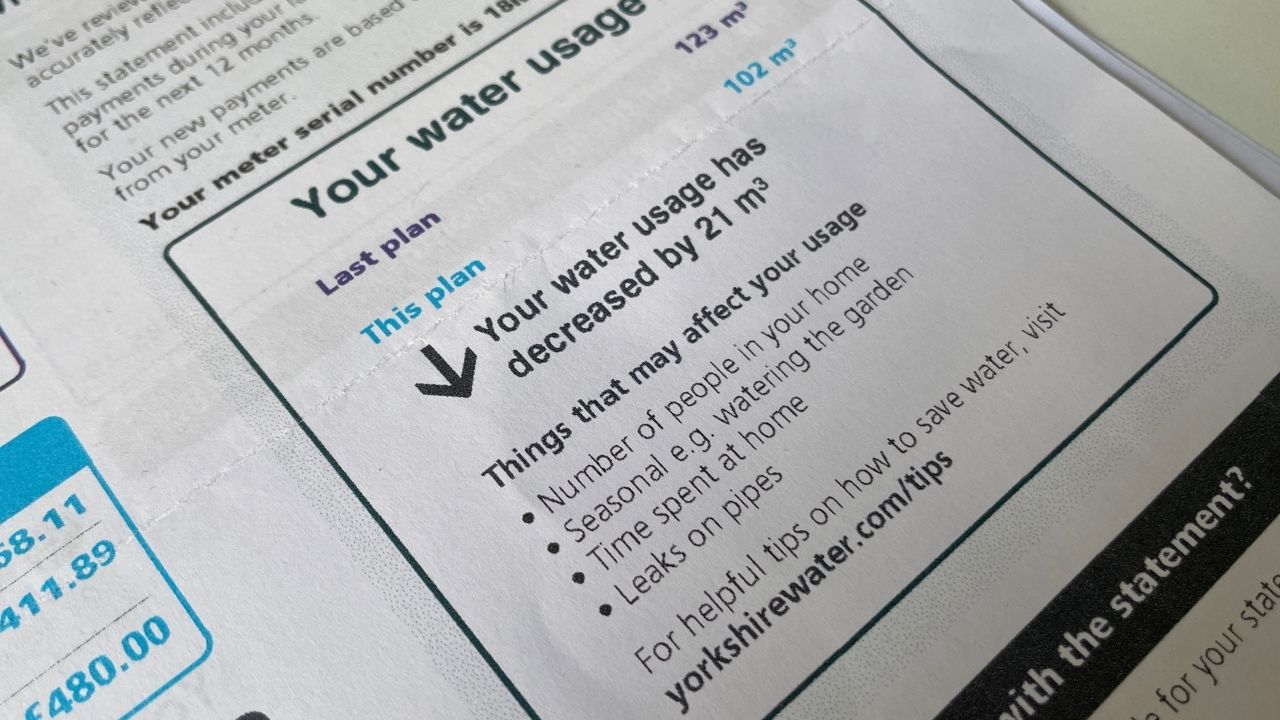
However, since then, our water usage – and our bills – have varied. Water usage in 2019 was 102m3, but a massive 123m3 in 2020 (probably due to lockdowns). This meant our bill jumped up to £480. Still a decent saving, but not as large.

In 2022, usage was down to 78m3, costing £324. Then it went up again in 2023 to 91m3 and a total of £425. The figure for 2024, the last statement I received, was 92m3 at a cost of £481.

That’s still a big annual difference of more than £100 compared to our non-metered charge from back in 2018! And since prices for unmetered rates have increased every year, the actual saving will be far higher.

When I think back to my previous house, where I lived for close to eight years, if we’d switched then and got similar savings we could have been close to a grand better off.

But – bear in mind my savings are based on the water usage of two people. I’ve played around with the calculator to estimate the cost if more people lived here. It’s still cheaper with three adults, but it could easily be £70 or £80 extra each year with four people than the fixed rates. So it’s important you check for your own circumstances.

How to reduce costs when you have a water meter

If you’ve already got a meter because you’ve moved into a house with a meter, had one for more than two years or compulsory installations are happening, well there are still ways you can cut your bills and it’s very very simple. You use less water.

There are obvious things you can do. For example, turning off the tap when you clean your teeth, or it’s making sure that you don’t necessarily flush the loo every single time. There’s that phrase “if it’s yellow let it mellow, if it’s brown flush it down”. It might sound a bit rough… but it’s true that you don’t necessarily need to flush it every time – and that will save some water.

Free water saving devices

In fact there are all sorts of things you can get which can help you use less water. From special bags that go in the water cistern to reduce the flush through to shower timers. There are even slow release crystals you can put in plant pots which mean you don’t need to water them as often. And they are free from most water companies.

For most providers you can go via Save Water Save Money and enter your postcode. You’ll see what’s available and what you can order for free. Alternatively, just google your water company and see if they offer anything for customers.

Our podcast

Listen to Cash Chats, our award-winning podcast, presented by Steve Alderton and Editor James Andrews.

Episodes every Monday.

How to volunteer at festivals (and go for free)

How to not pay for a ticket to festivals big and small.

I love music festivals. But they aren’t cheap. One-day events can easily cost more than £80 after fees (those damn fees!), and you’ve got to factor in travel, food and drink on top. And obviously it’s much more for weekend festivals.

This means I’m always looking for deals and ways to save on festivals, but if money really is tight yet you have the time, then it’s well worth looking into volunteering.

Essentially in exchange for a shift or two (or three if it’s a longer festival), you get free entry to the festival. Yes, you are working, so you might miss some of the action, but it could easily be saving you hundreds of pounds.

What volunteers do at festivals

If you’ve ever been to a festival, you’ve seen the type of jobs volunteers do. There are those scanning tickets and tying wristbands. There are people pulling pints. There are others picking up rubbish and recycling. And there are some just generally helping out by giving information.

Shifts tend to be seven or eight hours long. Though these are assigned in advance, it looks like at most festivals it’s possible to switch with other volunteers if they agree – just in case your favourite band clashes with the time you are working.

For longer festivals you may be required to work one night shift, and you might be working far away from the stages. Day festivals shifts tend to end at 8pm so you’ll be able to catch the headliner.

You also usually need to attend some training, and some festivals require volunteers to attend a day or two before the masses arrive.

Festivals you can volunteer at

There are dozens of festivals running in 2025, and I’ve seen opportunities including:

  • Glastonbury (waiting list only for 2025 as of May)
  • Leeds/ Reading Festival
  • Isle of Wight Festival
  • BST
  • All Points East
  • Download
  • Boardmasters
  • Latitude
  • Camp Bestival
  • Boomtown
  • Latitude

If you really want to get one of the bigger events you’ll want to keep an eye on registrations which tend to open in the new year. You may also have to have volunteered at a smaller one first.

Other volunteering benefits

You often get secure camping, guaranteeing you a decent spot that isn’t miles away from the action – and possibly some exclusive showers and toilets. When you’re working you’ll probably get a free meal too, saving some extra cash.

Some festivals will allow you to bring children with you too – though it depends on each event.

Volunteering requirements

You will need to be over 18 at most if not all festivals in order to volunteer and have proof you can work in the UK.

You also need to pay a refundable deposit, which is usually the equivalent of the ticket price. There’s a good reason for this – it stops people using volunteering as an opportunity to get tickets to sold out events and not turning up for their shifts. But it does mean you need to send cash up front. You may also have to wait up to 30 days for the deposit to be refunded.

Some roles require experience, such as bar work, though that depends on the festival. The most popular festivals might also request you work another festival in the same year too.

How to apply for festival volunteering

You can check out the information pages at different festivals, or take a look at one of the following sites. Some festivals offer different opportunities through different organisers. For example, you can volunteer for Reading or Leeds with either Hotbox or Oxfam.

If you’re applying with friends you can ask for shifts together (or at the same time) on the application.

Most are first come first serve, so the earlier you apply the better.

If you go via the likes of Oxfam or My Cause then you’re also helping charities, which sounds good to me!

Have you ever volunteered at a festival? I’d love to hear about your experiences in the comments below.