
How to quickly clear your credit card debt

The faster you pay off debts, the less they’ll cost.

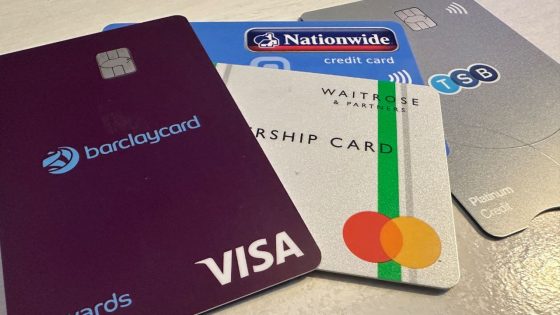
I use my credit card as much as I can for two reasons. One, I earn 1% cashback on most of my spending, and two, I know I can pay the full amount off every month.

Yet if those two weren’t the case, especially the last one, I’d avoid credit cards on almost all occasions (there are some exceptions). Misuse credit cards and the debts you build-up could cost you far more than you realise.

Here are six ways to clear your cards faster – whether you’re just mismanaging your repayments or you’re struggling with an unmanageable debt.

Some articles on the site contain affiliate links, which provide a small commission to help fund our work. However, they won’t affect the price you pay or our editorial independence. Read more here.
Pay it off with savings

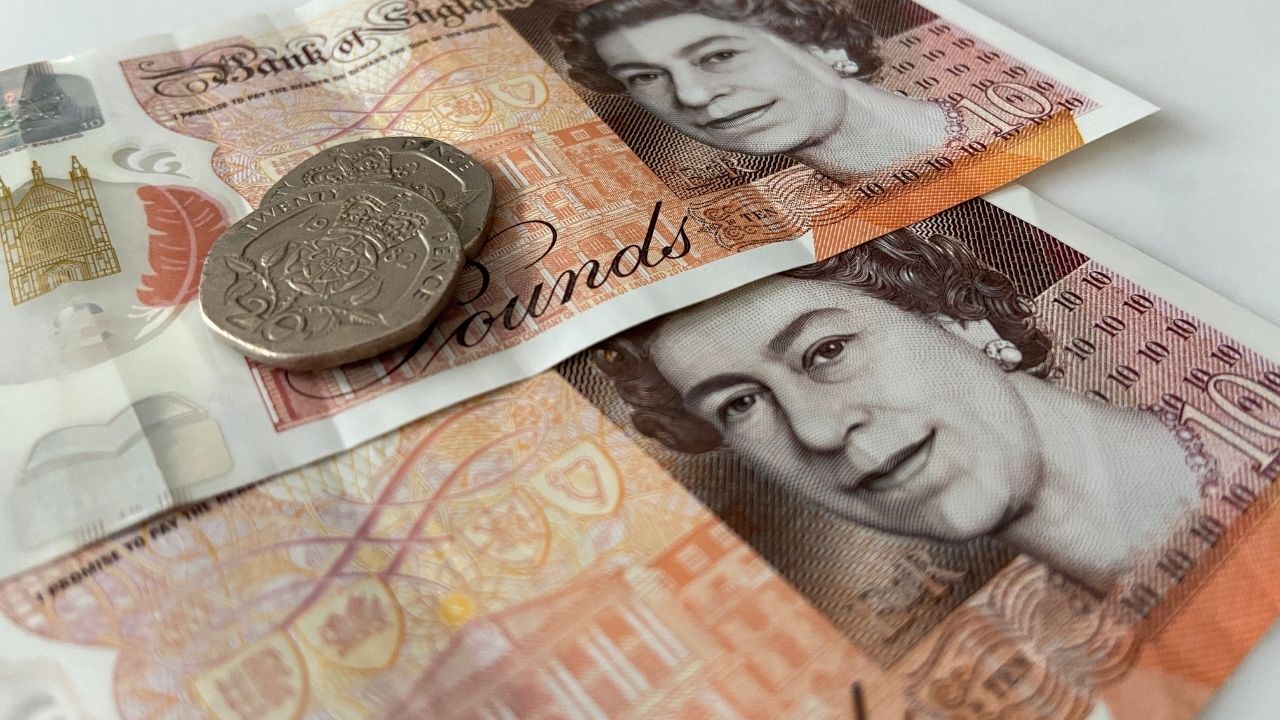
You’re probably being charged at least 20% interest on your credit card spending. Possibly 30%, if not more. So if there’s £500 on there, just 20% will add on nearly £10 for the first month alone.

But if you’ve got that cash in savings, even a decent easy access buy current accounts at 5% a year will only make you £2.08 in the same month.

So if you were to pay off the card rather than keep cash in savings you’d save £7.92 a month, or £94 a year. And it’ll be a much bigger saving if you’ve got a larger or more expensive card debt.

It’s good financial sense to have access to emergency cash, but if you have a credit card available, then consider that as your back up and clear the debt.

Transfer it to a 0% card

A zero percent balance transfer card allows you to move your existing credit card debt to a new one which doesn’t charge ANY interest for a set time.

This is a good alternative to paying off the debt straight away and it’ll give you some breathing space to cut down the card.

Have a plan of how you’ll pay off the card before the 0% period ends, ideally a set amount each month.

You can get ridiculously long 0% cards now, though if you think you can do this under 18 months it’s possible to avoid paying a transfer fee at all.

Pay as much as you can each month

It’s amazing how many people don’t realise just making the minimum repayments is a bad thing. Yes, though it’s vital to do this to avoid nasty extra fees, it won’t help you pay off a card.

Most minimum repayments are a percentage of the debt. So as you reduce the debt, the payments get smaller and smaller. This means it takes ages to pay off the debt. For example a £500 debt at 19% would take close to 18 years to clear and cost £842 in interest (based on paying just 2% each month).

Really you should be paying as much as you can. Doing this will reduce the interest you pay and clear the cards faster. So £25 a month will clear it a £500 debt in two years at the cost of £95. That’s a saving of more than £700!

Prioritise multiple credit card debts

If you have more than one card you owe money on, don’t pay them off evenly. Instead focus the bulk of your cash on one of those until that is cleared, then move on to the next one.

If you go for the most expensive debt, i.e. the one with the highest interest rate, you’ll reduce the total interest cost faster. This is known as the “avalanche” method.

Or if you target the smallest debt first, you’ll reduce the total number of debts faster. This is known as “Snowballing”, and is popular to help with motivation.

What’s vital with either approach is that you still maintain the minimum repayments on the other cards while you do this.

Set up a direct debit

Even though I always pay off my cards in full, there was one time where I forgot to post the cheque (yes, this was a a long time ago). If I hadn’t remembered and phoned the card provider on the due day, the missed payment would have shown as a default my credit report and added penalty charges to my bill.

To avoid this, I set up a direct debit to guarantee payment is made every month. You do need to make sure you have enough in your current account though – otherwise you could get hit by overdraft charges.

Get a low rate, long-term card

If you’ve got large or multiple credit card debts, or don’t have the credit rating to get a 0% card, you could look to consolidate your cards at a lower monthly interest rate.

This could be around 5% or 6%, a significant reduction from the rate you’re currently paying. For example, a £500 debt at 6%, with £25 month payments, will cost £27 in interest – £68 less than keeping it on a 19% card.

The corner shop stamp rip-off

Watch out when you’re buying your stamps – some retailers will be adding a hefty markup.

With most things I buy, I expect prices to vary from shop to shop. Bigger retailers will often try to undercut each other to attract your business. Smaller shops might have to charge more due to bigger overheads.

Now, I don’t have a problem with this. I’ll usually shop around for the cheaper price, but if I have to go to a smaller, convenience store, then I appreciate it’ll cost me more. Except that is for stamps.

Stamps should cost what stamps cost. Right? Well, I’ve found that’s not always the case, and I expect lots of people are unwittingly paying over the odds for postage.

And with recent price hikes from Royal Mail, it’s even more important to make sure you’re not paying too much.

Some articles on the site contain affiliate links, which provide a small commission to help fund our work. However, they won’t affect the price you pay or our editorial independence. Read more here.

1st class stamp and be clever with your cash logo on orange background

How much do stamps cost?

Most stamps don’t have a price printed on them, making it hard to know how much they cost! The current price of stamps are as follows:

How much is a First Class stamp?

  • A 1st Class stamp is £1.65.
  • Large 1st Class stamps are £2.60

How much is a Second Class stamp?

  • A 2nd Class stamp is 85p
  • Large 2nd Class stamps are £1.55

How much is a book of stamps?

There’s no discount for buying a book of stamps, so just multiply the individual price by the number of stamps (usually 6 or 12).

Overcharging for stamps in small shops

A few years ago at Christmas I picked up a book of 2nd Class stamps from a small shop. I’ll call it a corner shop even though it wasn’t on a corner. But that should give you an idea of the kind of shop I mean – an independent off-license/newsagent/random groceries store.

Now we were in a bit of a rush, so just asked for £10ish worth of stamps (we were taking advantage of the Amex Shop Small offer which used to be you spend £10 and get £5 back). At the time (before the multiple price increases since!), a book of 12 was £9, so we asked for two more stamps to take us over the £10 spend we needed.

Since it had been so long since I actually bought any stamps, and without a price printed on them, I just thought they’d gone up in price. A lot.

But, actually they hadn’t. The price, as set by Royal Mail at the time was 56p (remember this was a few years ago). So I should have got 18 stamps for £10.08, rather than 14 for £10.50. It represented a huge 34% markup.

Now, with our £5 credit back on the purchase, we still saved money on those stamps – but most people won’t have.

So was this just a mistake? Or a one-off?

Even bigger markups elsewhere

To get an idea I asked the price of a stamp in three similar “corner shops” around the London Bridge area on the same day.

The first only sold 1st Class stamps and charged 90p. But this stamp – at the time of the research – should have been 65p, so the increase was a massive 38%.

The second charged 70p for 2nd Class, while the third wanted 70p for 1st Class. Though the markups were smaller, the shops still charged more than if you got your stamps at the Post Office.

Watch out for Amazon too

It turns out the same issue occurs online too. Expecting Amazon to be a useful place for people to buy stamps (and top-up orders for free delivery), I was shocked to see overinflated prices there too.

Of course I shouldn’t have been surprised. A huge amount of items sold on Amazon are not sold by Amazon. Instead smaller retailers use the online giant as a middleman. And it’s these shops which are selling stamps above the set price.

Here’s one from March 2023. The listing says you’ll get a 12% discount on four 1st class stamps. But at £5.69, you paid £1.43 per stamp. That was already well over the odds, even before the price increases we’ve seen since. So be really careful!

Can shops sell stamps at a higher price?

That’s the big question really. If they can, then they aren’t doing anything wrong by doing this. But there’s something about stamps that didn’t ring true. My instinct was this is illegal.

First I checked the Royal Mail website. The terms and conditions for authorised stamp sellers are they cannot sell stamps for more than the set price. So that’s pretty cut and dried.

However, it turns out selling above the set price is allowed. This rule only counts if the retailer has purchased the stamps direct from the Royal Mail. If they’ve picked them up elsewhere – a cash and carry for example – the shop can charge what it wants.

When this first happened in 2017, I also asked Royal Mail for confirmation, and here was its response:

“Any retailer who buys their stamps direct from us for resale must, under our T&Cs, sell them at face value or lower. This also applies to retailers who buy from us and sell stamps online.

“However, if a retailer has acquired stamps from somewhere else, we cannot bind them to this condition.

“There isn’t a way of knowing whether someone selling stamps has bought them from us or not, and we don’t provide signage to retailers. However, there are approx. 50k outlets across the UK where customers can buy stamps at the correct price.

“If a customer has any concerns about the price of the stamps they have been sold, they should contact our Customer Services team on 0345 774 0740 who can check if the retailer is a customer of ours and get in touch with them to remind them of our T&Cs”.

The best deals

Find our picks of the best offers in our dedicated deals library

Where to buy your stamps at a fair price

Ideally the safest place to get them at the right price is at a Post Office. Shops such as WH Smiths also sell at the correct price, as do all the major supermarkets.

If you are buying from a smaller or independent store, it makes sense to always ask how much a stamp is first. If it’s more than expected, I’d challenge them to see if they’ll charge the lower price. Otherwise, walk away and find somewhere else.

Make sure the stamp has a barcode

Since January 2023, standard stamps have a barcode, as shown in this article’s main image. If you’ve any older ones you can send them off to be exchanged for the new versions.

If you have picture stamps without barcodes, such as Christmas ones, then you can keep using these.

You also don’t need to worry about the stamp having the Queen rather than the King on display. Both will work just fine.

When do stamp prices go up?

If stamps are to go up in price it tends to happen in the last week of March or early April each year, though it can sometimes happen at other times. Fortunately, you can still use a stamp bought in a previous year for the postage marked on the stamp.

How to survive until payday when you’re out of cash

The mistakes to avoid, and the tricks to help keep your funds going until the end of the month.

When you’ve had an expensive month or there’s been an unexpected cost, the knock-on effect usually means there’s very little left in the bank to get you to payday.

It’s usually at its worst in January as people often get paid early in December, but it can happen all year round, especially with the cost of living crisis messing with savings and spending.

So what do you do? Well it’s very easy to jump to high-cost loans and hope it’s just a one-off. But this isn’t a good solution.

First, I’ve shared the things you shouldn’t be doing so you know not to make those mistakes. Then I’ve written about a few things you can do to help that cash stretch a little further as well as a few cheaper alternatives for borrowing money.

Some articles on the site contain affiliate links, which provide a small commission to help fund our work. However, they won’t affect the price you pay or our editorial independence. Read more here.

Image of money

What not to do when you’re out of money

Don’t get a payday or guarantor loan

You know that payday loans are bad for you. Despite many of the big lenders going out of business, it’s still possible to take out payday loans, and they will cost you a fortune in interest charges.

Guarantor loans are also bad for your wallet and your credit rating. Avoid both of these types of loan, even if you’re desperate as there are cheaper alternatives (more on those below).

Don’t use your overdraft

Unless you have 0% interest overdraft the chances are that using one is costing you a lot more money than you realised with many banks charging rates of close to 40%.

Don’t put it on credit cards

It’s tempting to put the things you can’t afford on a credit card, or buy things via “easy” credit from retailers like Very.

But this isn’t just delaying dealing with the problem you’re also adding to it with extra interest and charges added on top of the amount you borrow.

Don’t use Buy Now Pay Later

You can now find the likes of Klarna, Clearpay and Laybuy on most retailer websites, so the temptation could be to just put your purchases on there to delay the payment over two or three months.

But if you don’t think you’ll have enough left over next month to cover these purchases and all the other new expenses that’ll come along you’re going to get caught up with constantly owing money month after month. Here’s more on why they’re not risk free.

What you should be doing to reach payday

Find and use existing sources of cash

Do use your savings

If your bank balance hits zero then the first place you should go is your savings. This is better than borrowing money where you’ll be charged interest, as that rate is almost certainly going to be higher than what you’re earning on your savings.

You could also see if friends or family will lend money to you, but make sure you all know upfront the terms of lending the cash – you don’t want it to be the cause of any animosity later on.
Pay with points and gift cards

Do you have a gift card at the back of a drawer, a build-up of never used Nectar points, rewards to your current account or a refund to an online account (Amazon and John Lewis are among the retailers who sometimes do this)?

These are all forms of money you can spend now instead of cash.  And don’t forget those coffee shop loyalty cards – you might have enough for a free cuppa!

Claim forgotten money and credit

I’ve written before about chasing down forgotten money, and this is a perfect time to actually do it! When we pay for most utilities we’re actually paying a month in advance. So when you switch away, you’ve actually paid more than you needed. Sometimes this is automatically refunded, but not always, so check to see if you’re owed any cash. 

Energy bills might also have been estimated, and if you’ve been overpaying your current supplier then you’ll likely have credit sitting there. You can ask for this money to be refunded to your account (though bear in mind there are still a few winter months ahead of us).

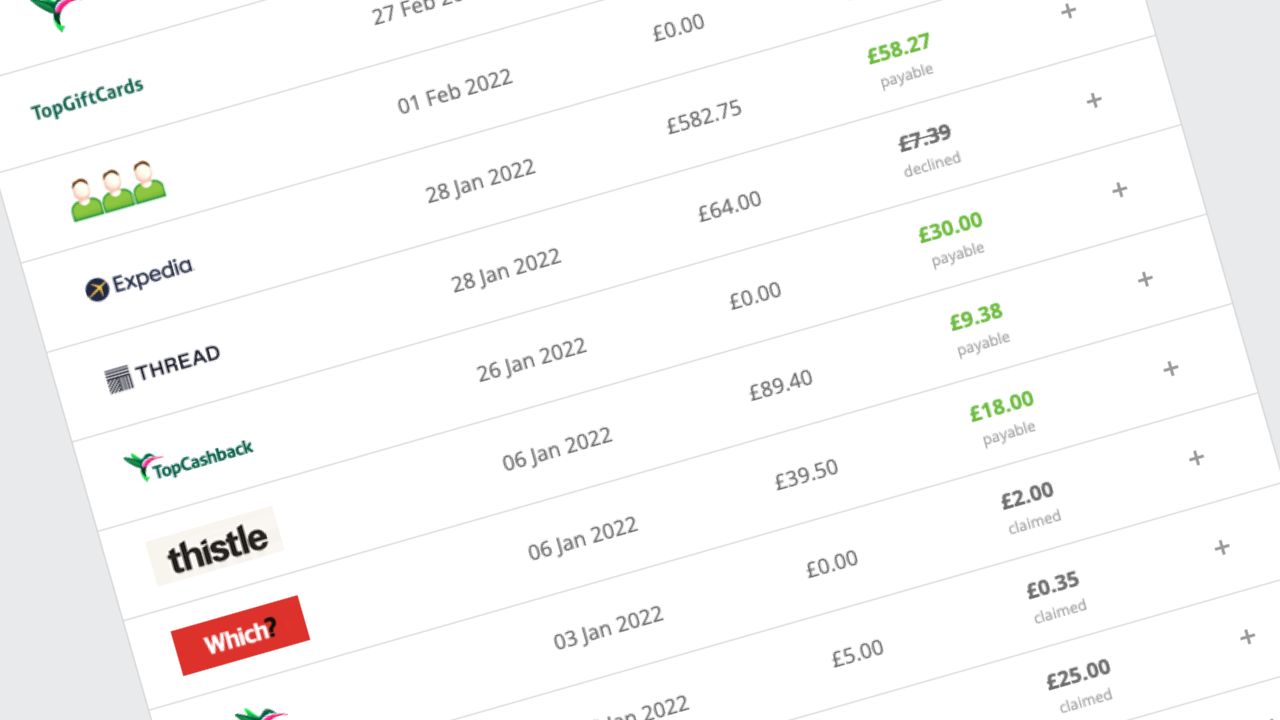
Don’t forget to check places like cashback accounts and money-making apps where you might have enough for a payout to your current account.

Borrow at the lowest rates (if you have to)

Consider a 0% purchase credit card

Another option is to look into a 0% purchase credit card. For a limited amount of time (it varies depending on the bank and card) you won’t get charged any interest on your purchases. This is the cheapest way to borrow money.

Of course, it’s not that simple. You will have to make at least the minimum repayments each month on the card and clear the balance before the 0% period ends to avoid any interest at all. And if you don’t think you can cope with this, or think you’ll be adding to the balance every month, then they’re best avoided.

Here’s our pick of the best cards right now.

Find the loans with lowest interest rate

If you don’t have savings and can’t get a 0% credit card, then you can still borrow money without resorting the charges you’ll get from payday loans and overdrafts.

See if you have a local Credit Union. The Finding Finance site will help you find responsible lenders. For bigger costs you can’t avoid then check out comparison sites to see what you’d get charged for a loan from a high street bank.

But only, and I really can’t stress this enough, borrow money in this situation if you really have to. And if the situation appears so bad that you can’t see a way out, then you absolutely should seek some free debt advice.

Think about how you spend

Do work out a spending plan

Yes, this might sound painful, but it’s essential to find out exactly how much money you have and where it’s going. Here’s how to make a budget.

Track your spending

Use your banking app or even a specialist money management app to keep an eye on where your money is going and when bills are coming up. Here’s my recent guide to these budgeting apps, taking you through how they work and the best ones.

Our podcast

Listen to Cash Chats, our award-winning podcast, presented by Steve Alderton and Editor James Andrews.

Episodes every Monday.
Do use cash

You’ll need to budget the money you have left and a simple way to do this is to only pay with cash. Withdraw the money you’ll need (and can afford), say for a week and then split it into different expenses. Then only take with you the cash for that activity.

This prevents you spending more than you intended and stops any impulse spending. You’ll need to leave your cards at home.

Of course, right now there are still a number of retailers operating as cash-only. If you’re faced with a card-only retailer, or don’t want to deal with change, you could look at using the pots or spaces features on digital banks such as Chase or Starling to split the funds out into different spending needs.

Cutback and shop around

Very simply, buy less. If something isn’t essential then you need to be strong and not spend money on it. This could mean you buy less and go out less.

You could even consider a no-spend week or month challenge where you only use money for things like food and bills.

If you do have to spend cash, look for the cheapest options. At the supermarket, trade down to own brand equivalents. When you travel, find the cheapest fare. Cook from scratch rather than ordering a takeaway It’s all obvious stuff, but you have to follow through and actually do it.

Find alternatives to new spending

Use up the food you’ve got

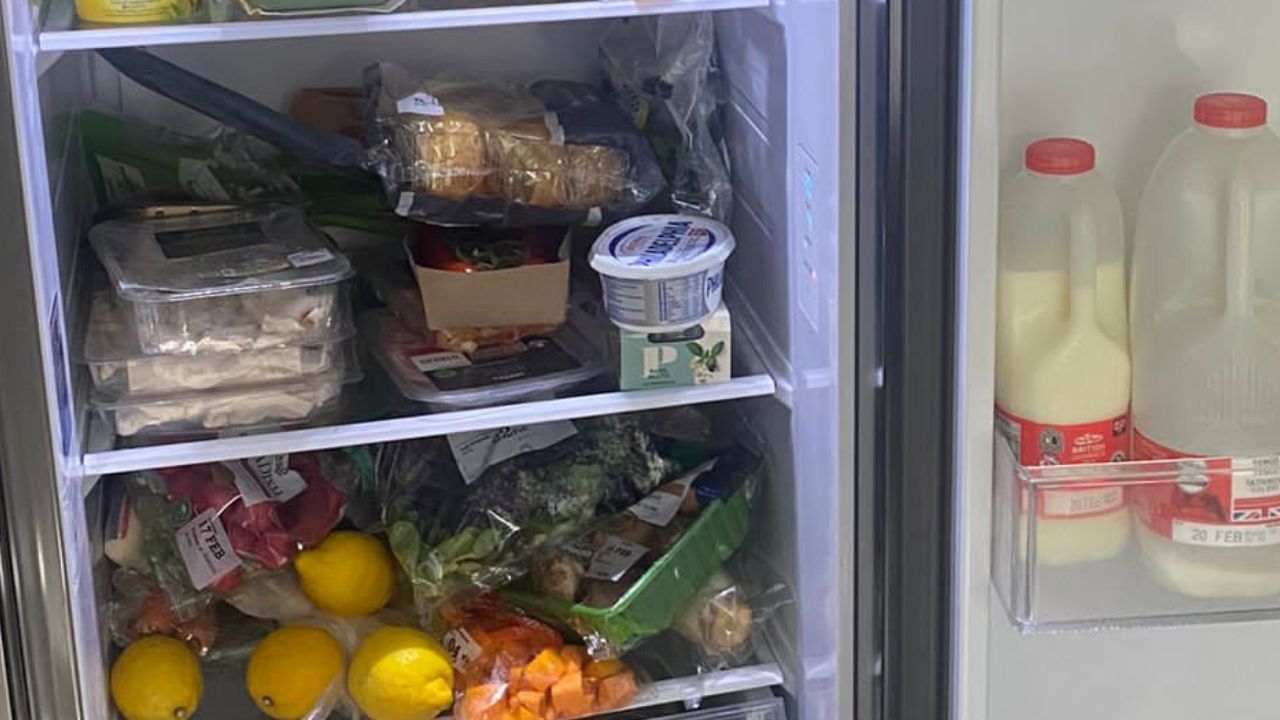
Check the cupboard, fridge and freezer. You will find all sorts of things hidden away that mean you don’t need to buy as much new food as usual. Just use these items up and then you can restock once you’ve been paid again and things are back to normal.

It’s always worth having a small stockpile ready for emergencies like when you’re too ill to go out or get snowed in, or months like this!

While we’re on the topic of food, you could also try cooking from scratch rather than buying ready-made meals or ordering takeaways. It really can work out much, much cheaper.

Find (new) clothes in your wardrobe

Go through your wardrobe and I’m confident you’ll find a few items of clothing you’ve forgotten about but are perfectly good to wear. 

If anything is looking a little shabby then you could see if it’s possible to repair them – if you can’t do it yourself there will be a local shop that’ll do it for a few quid. I got a coat fixed recently for a fiver and it’s as good as new.

Of course, there’s always the chance stuff doesn’t fit you anymore, in which case you could try “Schwopping” with friends or check out a charity shop.

Watch DVDs, read books and listen to CDs

Though I have a lot less than I used to, I’ve still got a decent collection of physical media, with hundreds of books, CDs and DVD that I’ve rarely touched since everything went digital.

Well, to save some cash take a month off from your streaming services and actually watch those DVDs. You can also find loads to watch on iPlayer and All4.

The same goes for other subscriptions – especially music. Cancel Spotify and listen to some CDs or the radio. And rather than buy a new book or magazine, revisit one of your favourites or head to the library.

If you are paying for TV via Sky or Virgin then you’ll only be able to cancel if you’re out of contract – but that’s well worth doing anyway and moving over to something like NOW TV.

Regift unwanted presents

If you’ve got a birthday or something coming up then check if you’ve anything you’ve been given that you’ve never used that could be a suitable gift. There’s more here on the dos and don’ts.

Barclays branch closures in 2025

Barclays is closing 20 branches – find out which ones and what to do if you’re affected

So far, Barclays has announced that it’s closing 20 branches in 2025.

Here’s what you need to know about Barclays bank closures.

Barclays card

When are the banks closing?

Here are the Barclays branch closures that have been announced so far. We’ve listed the branches set to go and when further down.

Date of announcementNumber of branchesTo close by
25 October 20246 branchesTBC
2 October 20244 branches17 January 2025
18 September 20243 branches31 January 2025
26 January 20242 branches31 January 2025
12 January 20245 branches17 January 2025

You can find reasons for each closure on the Barclays website.

Barclays opening time changes

Since 7 August 2023, almost all Barclays branches open at 9.30am and close at 3pm from Monday to Friday. They now close at 1pm on Saturdays. There are a few exceptions for branches in some shopping centres which stay open later in the week.

What to do if your branch is closing

If you use your branch

If you regularly visit your Barclays branch, this is bad news. You can pay in and withdraw money from your local Post Office, which might be enough, though there may be limitations on amounts per day.

Alternatively, you can open up another account at a bank which has a local branch near you, although they may announce their own closures soon enough.

Depending on the new bank you choose, if you also switch (which will close your existing Barclays account), you might be able to nab a switching bonus from the other bank.

Plus all your Direct Debits, standing orders and payments into your account will be moved over for you, so you won’t need to change anything manually.

However, you don’t need to switch to access another branch – you can just open an account with that bank direct.

If you don’t use your branch

The main reason for the closures is that very few Barclays transactions are done in person. So if you do everything online, you’re probably not going to worry about losing access to a branch’s facilities.

In that case, you don’t have to do anything and can keep your Barclays account. If you do, be sure to join the Barclays Blue Rewards scheme to access the Rainy Day saver account.

Andy’s Top Reward Current Accounts

Barclays branch closures in 2025

25 October 2024 announcement

Street AddressTownPost CodeClosure Date
43 High Street, SheringhamSheringhamNR26 8DUTBC
197 Shenley Road, BorehamwoodBorehamwoodWD6 1ARTBC
19 Main Street, LeistonLeistonIP16 4EPTBC
130 George Lane, South WoodfordSouth WoodfordE18 1AZTBC
22 The Borough, FarnhamFarnhamGU9 7NHTBC
21 Baxtergate, WhitbyWhitbyYO21 1BWTBC

2 October 2024 announcement

Street AddressTownPost CodeClosure Date
21-22 Castle Street , TredegarTredegarNP22 3DF17/1/2025
27 Bedwlwyn Road, Ystrad MynachYstrad MynachCF82 7AA17/1/2025
30 Main Street, CockermouthCockermouthCA13 9LQ17/1/2025
41 Market Place, PickeringPickeringYO18 7AE17/1/2025

18 September 2024 announcement

Street AddressTownPost CodeClosure Date
41 High Street, St NeotsSt NeotsPE19 1AS30/1/2025
15-17 Tottenham Court Road, LondonLondon – West EndW1T 1BJ10/1/2025
5 High Road, Willesden GreenWillesdenNW10 2TE31/1/2025

26 January 2024 announcement

Street AddressTownPost CodeClosure Date
41 High StreetSt NeotsPE19 1AS30/1/2025
5 High RoadWillesden GreenNW10 2TE31/1/2025

12 January 2024 announcement

Street AddressTownPost CodeClosure Date
41 Market PlacePickeringYO18 7AE17/1/2025
30 Main StreetCockermouthCA13 9LQ17/1/2025
1 Market PlaceBarnard CastleDL12 8NF17/1/2025
27 Bedwlwyn RoadYstrad MynachCF82 7AA17/1/2025
21-22 Castle StreetTredegarNP22 3DF17/1/2025

How to get an NUS / Totum discount card without being a student

If you’ve recently had a Totum discount card you might be able to renew it or get an Alumni card.

It looks like this hack is back, meaning even non-students can buy a cheap online course and get access to dozens of student discounts.

Or, if you previously took advantage of this trick, or graduated in the last three years, then you might be able to get a new Totum (formerly NUS) card without buying a course! Here’s how:

Image of a Totum discount card

Some articles on the site contain affiliate links, which provide a small commission to help fund our work. However, they won’t affect the price you pay or our editorial independence. Read more here.

What is an NUS / Totum card?

If you’ve ever been a student, you’ll know that your ID often doubled up as an NUS (National Union of Students) card and gave you discounts in shops, cinemas and more.

A good few years ago NUS started charging students to get an NUS Extra card, which as the name suggests, gave even more discounts. It’s since been rebranded to Totum.

The cards also now come with a Tastecard and an ISIC (International Student Identity Card), giving student prices overseas and on travel.

It’s a great way to save, even if there is a £14.99 annual cost plus £1.50 delivery. It’s cheaper to get a three-year card (at £29.99), though that only has the ISIC card for one year.

How much money can I save?

Potentially a huge amount.

Of course, it depends on what you buy. There are still thousands of ways to save. Plenty of high street shops will give a 10% discount, including Leon, Boots and Apple. Add on the discounts you can get at cinemas, theatres, galleries and thousands of shops and you should easily make your money back. Anything after that is a massive bonus.

Unfortunately, some student discounts (eg Young Persons Railcard), require a student ID. And some discounts – such as Spotify and Asos – are only available via sites like MyUniDays and StudentBeans which require a full .ac.uk email address.

Totum alumni card for previous cardholders

If you’re a recent graduate, or if you got a Totum card via the old version of the trick, you should be able to pick up an alumni card. This will give you all the same discounts, without you having to still be at university.

There are a few ways to get this. First you can log in to your NUS/Totum account and see if you’ve got the option to just buy a new card. I had a look at my old account and this was there ready for me to get. One thing I noticed was that this didn’t seem to be an alumni card, but it worked in the same way – as long as I didn’t change my place of study (doing this required a new verification).

It might be that your old log-in doesn’t work anymore as I recall having to change my password when NUS changed to Totum. In that case, try the following.

First thing to do is set up a support ticket with Totum. Ideally you’ll need your card number, but hopefully your email will suffice. You’ll then be sent a verification link to order your new alumni Totum card.

Or if you were an actual student who graduated within the last three years then follow the same link and upload proof of graduation.

This is the best option as you’ll only need to pay for the Totum card itself, and not an online course too.

Get a new student discount card when you aren’t a student

One of the first articles I wrote on the blog, and one of the most popular for years, was a hack to get a student discount if you weren’t a student. The trick was to sign up for an online course at certain providers where you’d be eligible for the NUS / Totum card.

I first signed up back in 2013 for an online Photoshop card, and repeated it a number of times until these online education businesses were all removed by NUS in 2018. Sad times.

However, since March 2023 it now looks like some online providers are offering access to the Totum card again. I’ve not tried it personally, so proceed with caution.

Which online courses make you eligible for a Totum (formerly NUS) card?

There are a few course providers, found via Reed, which promise eligibility for a Totum card. Ones I’ve spotted in mid-February 2024 include:

  • Global Edulink
  • 1 Training
  • Study365
  • Oxford Home Study Centre
  • Lead Academy
  • e-courses4you
  • e-careers

Prices seem to start at £12 for an online course.

The problem is that for most of these the reference to Totum doesn’t actually appear on the individual course descriptions. Instead it appears on the search results. But I’ve cross-referenced each of these providers and they do appear on the Totum application page.

So hopefully you’ll be able to request a code from the training provider once you’ve paid for your course. You’ll need this to verify on the Totum site that you are doing a course.

Of course there’s a risk that you won’t be able to get the verification code. If that happens then you could try to get a refund on the course bought.

Also be very careful that these providers don’t try to sell you their own student discount card. A number of them have these for between £8 and £14 but they are not the NUS / Totum cards. The only people you should be giving money to are whoever sells you the initial course and Totum’s own website.

Cheapest course I can find (14/2/2024):

The cheapest paid course I can find is £12 – not bad as long as you aren’t bothered about the actual course content. These were all via Reed, though it’s worth checking sites like Groupon and Living Social.

How to apply for your Totum card

Once you’ve signed up to your course, you can simply apply for a Totum card on the Totum website.  You may need to contact the course provider to get the verification or voucher code.

Here’s how to apply for your Totum Card:

  • Step 1: Go to Totum.com 
  • Step 2: Enter your email address
  • Step 3: Type in the course provider as your place of study. This should auto-populate the box after three characters. Once it appears hit continue.
  • Step 4: Enter the verification code
  • Step 5: Here you pick the length of Totum card you are buying and any add-ons (more on these later)
  • Step 6: Next upload a photo of yourself (this will be displayed on the card).
  • Step 7: Enter your personal details. You may be asked for a student number or password. You should be able to find this in the account you’ve set up for your online course.
  • Step 8: You pay! It’s £14.99 for a one-year membership, £24.99 for two-years and £29.99 for three. There’s a £1.50 charge for delivery.

Our podcast

Listen to Cash Chats, our award-winning podcast, presented by Steve Alderton and Editor James Andrews.

Episodes every Monday.

Best NUS card discounts

You can search the NUS Totum website to see where you can use it, though many businesses won’t be listed there so ask in-store or look for signs.

I’ve shared a list of some of the top places to look here. However, there are a few which I think are particularly special:

Apple student discount

If you’re going to buy an iMac, iPad or Macbook then having an NUS card means you can get the Education Discount worth up to 10% off.

Plus if you buy in August and September you can get a freebie. In 2023 it was an Apple gift card worth up to £120, in previous years it’s been headphones! To use online you click through from the NUS website. More on saving at Apple with a student discount

Boots student discount

Take your Totum card into a Boots store and ask them to link it to your Advantage card. You’ll need to do this each September.

More than books: 9 ways your library can save you money

Libraries offer a great free alternative to buying things you’ll only read once.

I like libraries. I even got married at one. Ok, it just happened that the registry office we used in Mayfair was in some lovely rooms above a library. But still. Libraries are cool.

The problem is, I hardly use them and have always tended to buy the titles I want to read – – whether they’re actual books or digital downloads. 

But unless it’s an absolute classic I’m unlikely to reread anything. So the books sit on a shelf. Read once, then go unloved for months, if not years, before I try to sell them or give them away.

So why don’t I get my books from my library? The answer is very simple. I forget. Yup, the prospect of a free book just completely slips my mind! And books aren’t all that libraries have to offer including e-books, audiobooks and (my personal favourite) the free digital magazines.

The more we use libraries, the more we support them against cuts, then the more likely they’ll survive. Which really is a good thing.

Of course, all libraries are different – and offer different services. The best way to find out is to visit your local or look at their website. So do check out what is going on at your library and join up while you’re there. You’ll probably just need some ID and proof of address.

Read on to find out, nine ways your library can save you money.

Some articles on the site contain affiliate links, which provide a small commission to help fund our work. However, they won’t affect the price you pay or our editorial independence. Read more here.

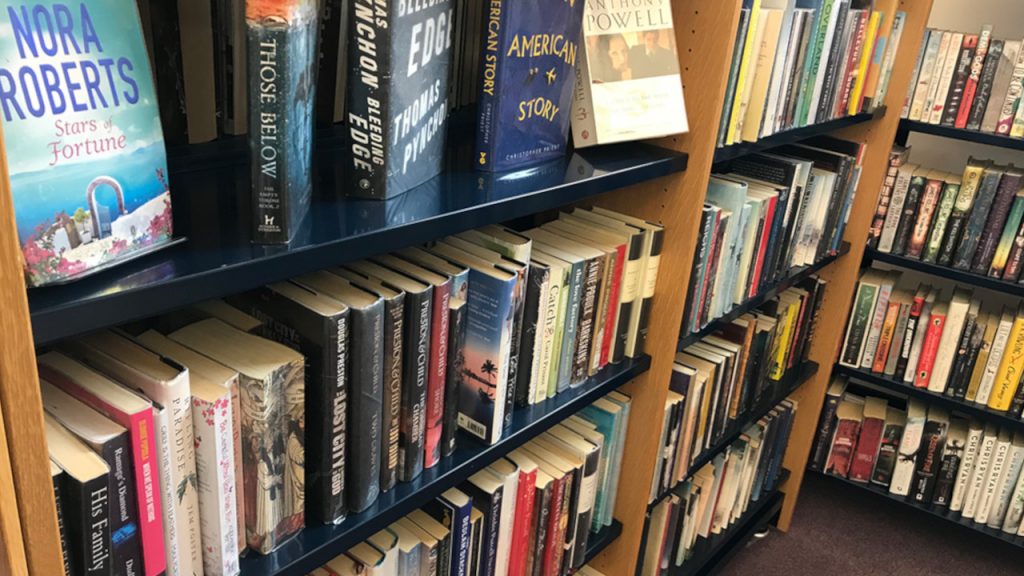
Books in a library

1. Borrow free books

Right, an obvious one to start. You can borrow books. For free. You literally can’t get your literature any cheaper.

Of course, your library won’t have every book going, but you can always reserve or order books. There’s usually a cost associated with this. Reservations from within your library’s area (so for me that’s all the branches in North Yorkshire) cost £1. 

If a new title is going to be very popular, libraries tend to get a few copies in, and at my local library, you can reserve future releases for £1. Even so, be prepared for a wait if everyone else wants a copy.

It’s a pricier £10 to order books from other districts via an inter-library loan, though that cost may differ where you live. At that price, you’re possibly only going to benefit if you’re after some rare, out-of-print or an expensive textbook.

2. Download free e-books and audiobooks

Most libraries also now lend digital books and audiobooks. It’s a natural modernisation as we consume content digitally. Again this is free. FREE.

Sadly at the moment, you can’t download books for Kindles, but you can read them on most other devices. Often you need an app, which means you can read it on your tablet or smartphone. A couple of common services are BorrowBox and Libby by Overdrive.

You use the same apps for audiobooks. If you were paying for a similar service – say Amazon’s Audible – you’d be paying £7.99 a month (though you can get a 30-day free trial with Audible).

There’s also a music streaming service called Freegal. It looks a bit limited but, once more, it won’t cost you anything compared to other ad-free services like Spotify Premium. It’s not going to be on offer everywhere but it’s worth a look.

3. Get free digital newspapers, magazines and comics

This has been one of my biggest money savers. I discovered that you can download hundreds of magazines a few years back. Exactly which titles you can get depends on where you live.

Though I now get it for free via my Club Lloyds current account, I used to read Empire Magazine this way, and my wife often checks out Vogue and Good Housekeeping. You can read them on your computer or view them via an app on tablets and phones.

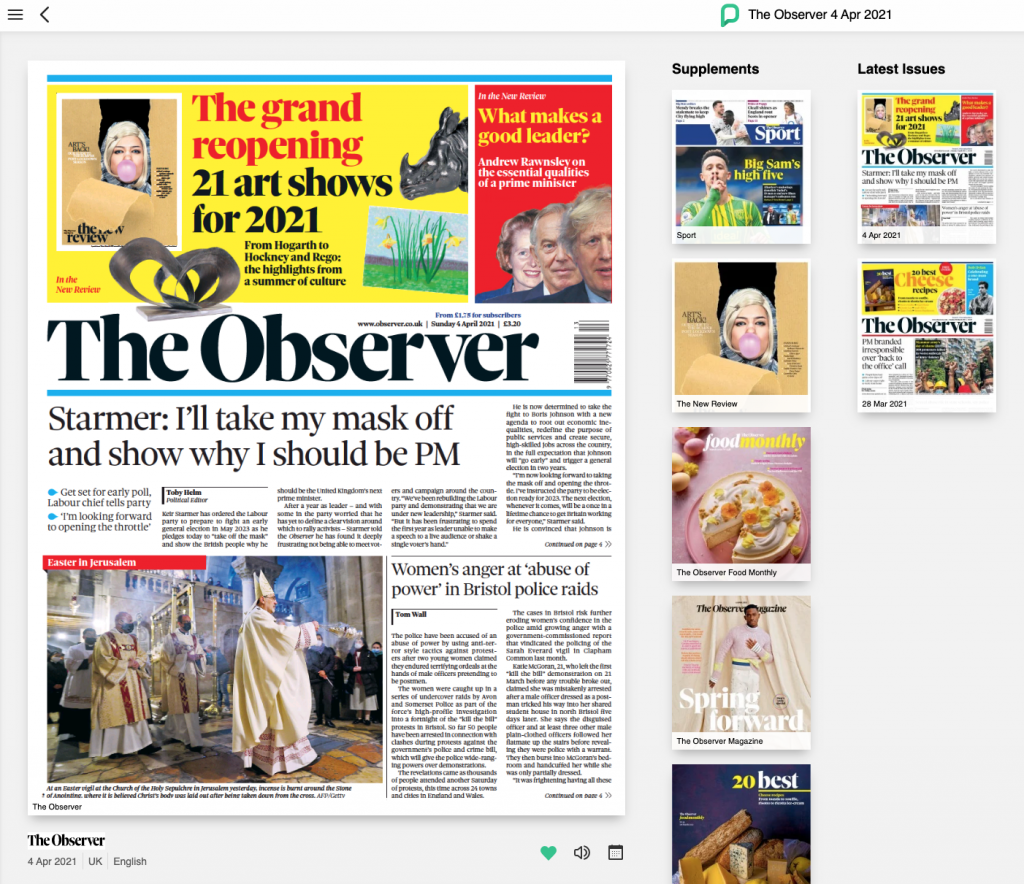
Some libraries also have a service where you can read today’s newspapers online. Yes, you can obviously head to the papers’ websites. But if you like reading a paper in the layout you’d get in print, then this is a nice option and cheaper than forking out £2 to £3 at the newsagent.

Plus you can read international titles, or those which are normally behind a firewall, such as The Telegraph (but not the Times or FT). The service I’ve got access to is Press Reader, which includes magazines too. I can access back issues too.

The Observer newspaper on Press Reader

Another discovery at my library was access to the Comic Plus app. This isn’t just great for kids – there are also lots for big kids, including plenty of graphic novels.  I had a brief nostalgia-filled spell a few summers ago where I devoured dozens of issues of Transformers comics – harking back to my childhood! 

If your local authority doesn’t offer any or some of these, a few libraries will let you sign-up online to access these services without proving you live in the area.

4. Borrow DVDs, games and CDs

With faster broadband, it’s pretty easy to stream your music and films via the internet. But if you want to have a physical DVD then lots of libraries still rent them out, including new releases. This can be a pretty cheap way of watching box sets as you’re often charged per box, not per disc.

Less libraries offer CDs now, and any games are probably for older consoles. You’ll also be charged for these. But it’s certainly worth a look.

5. Buy old books & DVDs

If you still like to own books, then it’s worth seeing if your library sells off old titles. My library normally runs them three or four times a year, with the money going towards other library activities.

I last went to one earlier this year and some of the stock had dated – travel guidebooks for example, but there was plenty to choose from. I came home with the Alan Partridge biography for 50p, and a couple of cookbooks at £1 each. All were in really good nick.

6. Attend free or cheap classes

Libraries are great for learning. In researching this article I’ve randomly looked at half a dozen regions in the UK and seen classes as diverse as yoga, coding, gardening, self-publishing, chess, drumming and knitting.

Many of these were free, or a nominal couple of quid. Far cheaper than the equivalent elsewhere. Most library websites list what’s going on.

Our podcast

Listen to Cash Chats, our award-winning podcast, presented by Steve Alderton and Editor James Andrews.

Episodes every Monday.

7. Access online resources

That learning can also be done at home. If you join your library you should get access to some online tools.

For example, my local gives free access to the genealogy website Ancestry. This normally costs £13.99 a month. There are also all sorts of databases and other memberships you could take advantage of.

8. Entertain the kids

There are also loads of activities for children at libraries. Reading is such an important part of developing kids that it’s great to surround them with so many books from a young age, plus over school holidays there are bound to be events taking place.

And the fact that they are free can be a huge boost. Again, look at your local library’s website, or pop in to see what’s advertised.

9. Work at home, but not at home

Finally, one that could be useful if you need a change of scenery when working from home. I’ve got a decent office set up at home, but I know lots of people like to get out of the house. Yes, you can go to a coffee shop and plug into free wi-fi, but you’ll probably need to keep buying cups of coffee.

For some variety, you can head to your library. Yes some of the computers will be pretty old and you need to be careful with log-ins and passwords, but it’s a free or cheap alternative. And a quiet space to work if it’s noisy at home.

Many libraries also offer meeting rooms to hire, often at far cheaper rates than hotels or other venues. Look out for reduced rates if you’re running a community event.

Be Clever With Your Cash is nine!

The highlights for me and the blog over the last 12 months.

As has now become tradition, I use Be Clever With Your Cash’s birthday as a chance to share with you the good and the bad from the last year.

I rarely write about “blogging” itself or the challenges of running my own business, so also it’s a good opportunity for me to reflect on how things have gone and give you a bit of an insight into what happens behind the scenes.

Plus, I’d really appreciate it if you can fill in my annual survey so I can get your feedback on everything I do.  You’ll also be in with the chance of winning a £25 gift voucher or an hour long video chat with me.

Some articles on the site contain affiliate links, which provide a small commission to help fund our work. However, they won’t affect the price you pay or our editorial independence. Read more here.

The biggest year yet

In recent birthday updates, I’ve shared how I quit my 9-5, presented a TV show and undertook a huge site redesign. All massive changes for the business and myself personally.

But this year, for the first time, there’s been nothing new. Nothing seismic. Or at least on the surface.

In reality, it’s actually been the biggest and most successful year yet. With 4.8 million views of the blog and 3.3 million views on YouTube, there was an amazing 60% growth compared to the previous 12 months. The podcast has also increased listenership, with 250,000 total downloads in the year, up by 40%.

Though I have an indie/blogger mentality, where I’m doing my own thing (on my own), this was the year where Be Clever With Your Cash really hit the next level.

If you forgive this tortured metaphor, it feels like the site is no longer a big fish in a small (blogger) pond. It’s moved up to an even bigger stretch of water, with some even bigger fish.

As I write this, the all-time views for the blog have passed 15 million, while the 10 millionth visitor should reach the site next month.

I’d never have dreamed of that kind of reach and impact when I started. To have saved so many people so much money is something I still struggle to comprehend.

And it’s not just about numbers. Getting Rishi Sunak on the podcast last spring was a huge coup, as was having Cash Chats featured as “Show of the Week” in the Radio Times in November. This isn’t “indie” anymore.

So, the question is what next? Very soon I’ll hopefully be able to share with you what the next chapter of Be Clever With Your Cash looks like. I’m really excited about the plans. Fingers crossed!

The pros and cons of a digital nomad

Something I’ve really loved about the last few years is the complete autonomy I have in when and how I work. I can choose my hours, allowing me to disappear to play tennis mid-morning or take afternoons off to binge the Olympic TV coverage.

Though it also means I do more hours than I’ve ever done before, and I often end up working late and at weekends. And I never get a chance to “switch off”, even on holidays when there’s always something that needs to be done on the site.

Even so, it’s a flexibility I’m always keen to take advantage of. So when my wife was between contracts in September and October we took the opportunity to try out remote working for an extended period. In theory, I can do what I do anywhere, so we headed to California for seven weeks. Part holiday, part working.

There were fantastic parts to the trip, especially the weather and the food. I studied there as a student so it’s always a place I feel at home.

However, the work side of things was tougher than expected. I found the eight-hour time difference an issue when responding to the day’s events, while my laptop wasn’t up to the job of live streaming and editing.

And there wasn’t really any proper holiday time as I had to do some kind of work almost every day, including filming a video about a Bank of England base rate rise in a LA hotel at 5am before heading to Disneyland for the day!

It also coincided with the collapse of the Liz Truss government and the chaos of the “mini-budget” so I woke up every morning wondering what fresh financial hell awaited me (and stressed about how much the pound had fallen against the dollar).

I’m glad we did it, but I think I’d rather put things in place so I can actually get away completely, and switch off for a fortnight!

Deprioritising other work

In last year’s birthday blog, I wrote how I’d refocused on what I viewed as a success for me and the business. Previously I’d seen being a TV money expert as the ultimate end goal. However, I’d not only accepted that might not be, but also that I wasn’t actually that bothered.

Instead, I was enjoying the success that I’d built on my on channels. Prioritising the growth of the blog, YouTube and podcast to help as many people as possible.

That’s still the case, and I frequently turn down local radio requests as I don’t have the time. I even had to rebuff some approaches from publishers to pitch book ideas as I knew there was no way I could do that and deliver the content I want to provide for all of you. Freelance work has been restricted to my weekly column in Metro and my monthly one for Reader’s Digest.

Still, it was nice to have a few TV appearances under my belt again for the first time since Shop Smart Save Money ended in 2019.

It took a while though! In the spring I filmed a pilot with Helen Skelton that didn’t get picked up, and I had to turn down some Jeremy Vine discussions in the summer due to availability.

So I didn’t get back on screen until a Channel 5 documentary back in September that looked at the cost of living crisis. This was followed a few months later by ITV Calendar news.

Then earlier this year I appeared on BBC News to discuss bank switching and then a few days later joined the Steph’s Packed Lunch team for Channel 4 to talk about haggling down bills.

I really enjoyed the experiences, especially the live element of the latter two. But I also enjoyed how I didn’t put any pressure on myself on what happens next.

I did some TV, and it went well. Then back to the day job. Which is how I like it.

Connecting with you

The real highlight for me in the last year though has been the growth of the community via the Facebook group and YouTube live Q&As. “Speaking” regularly with you has been transformative in how I run the business, so thank you for joining in and contributing.

My annual survey: Win a video session with me or a £25 voucher

It’s important to me that any content I produce for you is what you actually want to read, hear or watch. So please do take a few minutes to answer this short survey. 

If you also enter your email address at the end of the form you’ll also be in with a shot of winning a £25 gift voucher or an hour-long video chat with me. This prize draw ends 30 March 2023 and one response will be randomly selected and asked whether they want the voucher or money chat. Open to UK followers only.

Our podcast

Listen to Cash Chats, our award-winning podcast, presented by Steve Alderton and Editor James Andrews.

Episodes every Monday.

MVNOs: The piggyback hack that’ll cut hundreds from your mobile phone bill

Mobile Virtual Network Operators (MVNOs) give the same signal at lower prices.

It’s easy to ditch EE, O2, Three and Vodafone and save money without compromising on the quality of your service. That’s thanks to cheaper networks which piggyback off the big four networks to deliver their services.

Some articles on the site contain affiliate links, which provide a small commission to help fund our work. However, they won’t affect the price you pay or our editorial independence. Read more here.

What is a Mobile Virtual Network?

There are four main networks. EE, Vodaphone, O2 and Three. And these are actually the only real networks. The rest are what are known as mobile virtual networks operators (or MVNO). And that includes big names such as Virgin Mobile, Giffgaff and ID Mobile.

Essentially these MVNOs have agreements in place to lease the infrastructure and technology of the main networks to offer their own branded services – and their own prices.

Benefits of switching to a virtual network

There are two key reasons not to be scared of switching your provider.

They usually have the lowest prices

You will get much, much lower prices from the virtual networks. This is even the case for those owned by the big networks such as Giffgaff (owned by O2’s parent company Telefonica), BT Mobile (which actually owns EE) and Voxi (owned by Vodafone).

Here’s a good example. Right now 5GB of data and unlimited texts and minutes with EE will cost you £18 a month. But 10GB of data from BT Mobile is half that price for BT customers. That’s a saving of £108 a year and double the data!

A handful of MVNOs are also changing how you’re charged – which could make them the cheapest option for you. Sky Mobile will let you carry over unused data, while Smarty will give you credit back on each full GB of data.

Or you can get extra discounts thanks to your existing contacts. BT, Sky, Virgin and TalkTalk all offer their customers special deals for adding a mobile SIM to their existing TV and broadband packages.

You can get the same signal

You won’t see any difference to reception as long as you move to one which operates on the same service as your current main network.

So that could be Virgin Mobile instead of EE, Tesco Mobile instead of O2, ID rather than Three or Voxi rather than Vodafone. There’s a decent list of the main virtual networks and the network they use further down the page.

There might be some minor differences. Though most will be offering 4G service, not all will provide 5G. And they don’t all allow wi-fi calling via your number – though you can get around this by using alternatives such as What’sApp to make calls via the internet.

Benefits of sticking with the big networks

Of course, it doesn’t mean the main networks don’t have benefits. The following can mean you’re better off sticking with the likes of EE and O2 – but only if you’re able to get those prices down.

You can really haggle down prices

This is true for most, if not all, mobile networks – but especially with the big four. Use your research on the virtual networks to find the price you want to pay and then see if your existing network will match or beat it. 

Until recently I was with Three one and off for years. And every time I went to cancel they came back with an even lower price than what was advertised on their website.

Third parties often have cheaper deals

You can also get new contracts or upgrades via comparison sites and mobile phone shops that can be significantly cheaper than going direct, though they don’t always include extras, such as those listen in the next point.

You often get extra features, services and freebies

Free streaming

The big networks offer all sorts of discounts, such as £2 off Disney+ via O2, or free Paramount+ via Three. However, these offers are usually restricted to certain tariffs. – and they might work out no cheaper than finding a different deal elsewhere and paying for the streaming direct.

Now these can be great value for money IF you are already planning to pay for these services. But they certainly shouldn’t be the main reasons to choose one of the main networks. 

Loyalty apps

The same goes for Vodafone’s VeryMe, O2 Priority and Three+. These popular loyalty apps do have the occasional great freebie or discount – but you need to check just how much extra these are costing you.

Use them a lot on things you’d get anyway then great – e.g. the free Odeon tickets and Greggs from O2. But in my experience these are nice to have extras rather than essentials.

And there’s a hack that’ll get you access to each one even if you’re with different networks.

“It’s understandable people are nervous of switching – but it’s costing them a fortune”

One of the families I filmed with for the Channel 5 series Shop Smart Save Money was Christine and James. Christine was paying a fortune with O2 but she didn’t want to change her provider. She knew O2 gave a signal in the locations she needed it and didn’t want to risk bad reception with another mobile company.

And I think that’s quite a common feeling. We rely on our phones all day, whether at work or at home. Yes you might be able to get a signal with another big network, or you might be able to hop on to some wi-fi at those locations. But sometimes you just want to stick with what you know works.

However I was able to convince Christine that not only would she save a shed load of cash by moving away from O2, but also that switching provider isn’t actually much of a risk. All thanks to finding an alternative virtual network that still used the O2 network.

Which Mobile Virtual Network Operators use each network

There are a number of providers out there, but here are some of the main ones you will see. Some are very familiar names!

MVNO for EE

  • BT Mobile
  • Plusnet
  • Your Co-op
  • Utility Warehouse
  • 1pMobile

MVNO for O2

  • Virgin Mobile
  • Giffgaff
  • Lyca
  • Sky
  • Tesco Mobile

MVNO for Three

  • ID
  • Smarty
  • Superdrug

MVNO for Vodafone

  • Voxi
  • Talk Mobile
  • Asda
  • Lebara

How to bring your mobile phone number with you

You can take your existing phone number with you to your new network. You just need to request a PAC from your existing network and give it to your new one, and your number will be moved over, usually the next working day. Here’s more on how that works.

Can you beat the bill price hikes?

Which of your bills are going up and how to avoid paying more.

It’s the time of the year when a whole host of price increases are announced for a number of big services we all pay. Broadband, mobile, energy, council tax, water, TV… you name it.

And since many price hikes are linked to inflation rates from December last year or January this year, it means many bills are going up by up to 17%!

If you’re out of contract it can be the nudge you need to look for a better deal. Or even cut back on the services you pay for.

Of course, sometimes you can’t do much or anything about it. You can’t switch your water or Council Tax to a cheaper provider. Some contracts have annual increases written in when you sign up or exit fees.

But even in these situations, you might be able to find some savings. So in this article I’ve shared the top ways to pay less on your bills.

Some articles on the site contain affiliate links, which provide a small commission to help fund our work. However, they won’t affect the price you pay or our editorial independence. Read more here.

Broadband and phone bills

Virgin Media, BT, Sky and other many broadband bills are going up at the end of March and start of April by around 14%. Which is huge!

The bad news is most customers can’t do anything about it until they are next out of contract. But the good news for Sky and Virgin Media broadband customers is you can use this as a chance to break your contract penalty free – handy if you’ve not been happy with service. Sadly this could be the last increase where this rule works for Virgin Media.

If you can break your contract, or if you’re already out of the initial one, then use a comparison site to see what you can get from a different provider. Here’s more on getting the best deal for your broadband.

New customer extras (such as bonus gift cards or extra credit on your account) aren’t as good as they used to be, but it’s still well worth seeing what’s out there. Don’t forget to go via cashback sites Quidco or TopCashback as you might be able to get £100 back, perhaps more.

Or you can use your price research to haggle. Along with mobile networks, I’ve found you can often get money knocked off your bill if you tell your provider you are going to leave. Then see what they offer you to get you to stay.

TV and streaming bills

You could be hit by Sky, Virgin and BT increases even if you don’t get broadband with them as TV customers will see hikes too – and these won’t allow you to ditch mid-contract.

If you’re out of contract you could shop around or haggle here too – but personally I’d see it as a chance to ditch something you are probably overpaying for!

Instead you can get all the Sky channels via NOW TV or Sky Stream, though I’d go with the former as you’ve more flexibility.

This will work out a lot less each month for most customers, though the sports channels can make it less cost-effective, especially since the Sky Sports and Boost packages on NOW and the BT Sport month passes have all increased in the last month. Here’s more on ditching Sky and Virgin TV.

Elsewhere, we’ve not had any other major streaming price hikes this year (so far at least). But prepare for changes in the near future as Netflix is set to bring in sharing restrictions and Disney+ might start charging more to avoid adverts. Even if there aren’t hikes, I think it’s a good opportunity to streamline your streaming and pay for fewer services each month.

Oh, and the TV Licence is frozen this year, so there’s no increase. Though I think it’s a vital service, those who don’t want to watch live TV or use iPlayer can stop paying.

Mobile bills

EE, BT, Three, O2, Sky and Vodafone are among the networks that have already announced price increases or have it written into existing contracts. And if you’re with Virgin Mobile or O2 it could be going up by more than 17% more!

If you’re not already SIM-only, then as soon as you are out of contract you need to seriously consider this. With 12GB deals available for £7 a month (or less with offers) there’s no reason people should be paying more than this.

If you’re out of contract it’s worth calling up your network to see if they can offer you a discount to stay. Don’t let them fob you off with free extra data. If you don’t need it you won’t use it, so you’re really gaining anything. Here’s more on how to pay less for your mobile phone bill.

Energy bills

Right now we’re set to see a £500 increase to average annual energy bills from 1 April 2023, along with the end of the £67 a month energy grant that’s been around since October. This is despite the energy price cap falling.

However, it’s looking increasingly likely that in the Budget on 15 March (perhaps before), the Chancellor will reverse part of this by extending the existing Energy Price Guarantee free. So we’ll still pay more each month, but not quite as much.

Water bills

Right, so can’t change your supplier if bills are going up. But you can potentially move to a water meter. The rough rule of thumb is you’ll save with one if there are more bedrooms in the home than people. But it’s best to use a calculator to get a better estimate of whether you will save.

And if you’re already on a water meter you can add water saving features to your home and ultimately just try to use less of it. Here’s more about reducing your water bill with a meter.

Council Tax

Most councils will be putting up prices from the start of April by up to 5%.

It’s also another bill you can’t switch. But you might be eligible for a discount. For example you’re the only adult in the property, are a student or are a carer.

It’s also possible to check whether you are in the wrong band. If you are, then payments could be backdated. Here’s more on cutting your council tax bill.