









A pension is the main way you save money for retirement, so you’ll have enough money to live off when you stop working.
The state pension is available to almost everyone but you might also have a workplace pension, or you could’ve set up a private pension. The earlier you get these savings products set up, the longer they have to grow, but you can start at any stage.
Here we look at how each different type of pension works and which one is best for your long-term saving plans.
Some articles on the site contain affiliate links, which provide a small commission to help fund our work. However, they won’t affect the price you pay or our editorial independence. Read more here.
What is a state pension?
The state pension is a government benefit for everyone who meets the qualifying criteria, and pays out at a certain age. It pays out a monthly sum of money to help with the cost of living when you’re no longer working.
How much is the state pension?
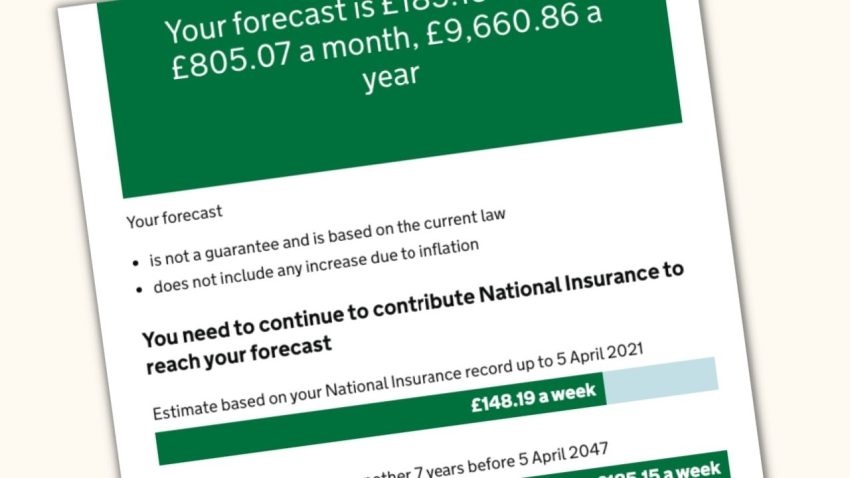
The state pension is a set amount of money, but the exact amount you’ll receive depends on a few different things. Firstly the amount of national insurance (NI) you have paid while working.
- You need to have made NI contributions for 35 years to get the highest amount of money, which is currently £241.30 a week.
- To get any amount of money you need to have made NI contributions for at least 10 years – this starts at £68.90 a week.
- If you’ve made between 10 and 35 years of NI contributions you’ll get a sliding scale of money in your state pension.
NI contributions can be made in a few ways. If you’re employed they’re usually paid by your employer, if you’re self employed you’ll pay them via your tax return, but you can also pay voluntary contributions.
If you have received certain benefits, such as Universal Credit, Child Benefit, or if you’re not working because you’re on maternity or paternity leave, you can also receive NI credits that count towards your overall allowance.
When can I claim the state pension?
The current age you can start receiving the state pension is 66 for most people, although this is changing. You can find out exactly when you should be able to claim it on the government pension website.
For anyone born between the 6th April 1960 and the 5th April 1977, the age you can claim will be between 66 and 67. If you were born between the 6th April 1977 and the 5th April 1978 the age you can claim will be between 67 and 68. If your birthday is after the 6th April 1978, you’ll be able to claim from your 68th birthday.
What is the state pension triple lock?
The state pension triple lock is a system that calculates how much the state pension increases by each year.
It will rise by the highest of the following three factors:
- The previous September’s Consumer Price Index (CPI), which shows how much living costs have risen by
- Average wage increases from the previous May to July
- 2.5%
This April the state pension rose by 4.8% because the highest factor was wage increases at 4.8% (CPI was 3.8%).
There are two specific pensions that don’t use the triple lock, and instead use the CPI rate when calculating the annual rise. They are the additional state pension, for those who started claiming their pension before 6 April 2016, and any extra money you get in your pension because you delayed taking it.
What is a workplace pension?
A workplace pension is a pension set up through your employer. This is done automatically when you start a new job, unless you decide to opt out. Both you and your employer will contribute to a workplace pension.
Workplace pensions are beneficial as you are effectively getting extra money from your employer, but there are also tax benefits. You don’t pay income tax or NI on money put into your pension straight from your pay cheque and this means your pension pot is boosted by 20% (or more in some cases) depending on the rate of income tax you usually pay. This applies up to the annual allowance, currently £60,000, for pension contributions.
Are there different types of workplace pension?
Yes, there are several different types of workplace pension. If you’re unsure, speak to your employer or your HR department and they should explain what your options are.
Defined contribution pensions
Defined contribution pensions are the most common type of workplace pension. With these pensions money is put in over time and then invested in the stock market, with the hope it then grows and you build up a retirement pot for when you stop working, although as with any investment there are no guarantees.
When you take out the money, which you can do from the age of 55 (rising to 57 from April 2028), you can decide how you receive it. You can usually take up to 25% out as a tax-free lump sum and the rest is paid as an income.
Defined benefit pensions
Defined benefit pensions are not very common anymore, and have largely been replaced with defined contribution pensions in the private sector.
If you have a defined benefit pension, the amount of money you receive when you stop working is based upon either the average amount of money you have earned since you joined the pension scheme, or the final salary you had before you stopped working.
These pensions rely on employers to make sure there is enough money for you in your pension pot, and you may be required to contribute some of your wages to it.
What is a pension drawdown?
Pension drawdown allows you to take money out of a defined contribution pension. You can usually take out 25% as a tax-free lump sum if you want to and leave the rest of the money invested.
As the money is invested still, it should continue to rise in value but this isn’t guaranteed. You can then decide how you access the rest of the pot, either taking it as a regular income until you die or as lump sums of money.
You could also buy an annuity, which provides a guaranteed income when you retire.
What is a salary sacrifice pension?
Salary sacrifice is a way to swap part of your salary for another benefit, such as pension contributions. This is something offered by some employers – and not an option for everyone.
There are tax benefits to using salary sacrifice, to you and your employer. Your gross salary is reduced with salary sacrifice, before NI is calculated on it – this saves both you and your employer money. In comparison if you are making pension contributions through a standard workplace pension, you will get income tax relief, but you’ll still pay NI on the contributions.
What is a SIPP?
A SIPP – or self invested personal pension – is a private pension you can set up. You are free to choose the pension provider, how much money you put away, and where your money is invested. You can open a SIPP from the age of 18 and an adult can open one for a younger child or grandchild too.
How does a SIPP work?
A SIPP lets you choose your investments, which you can’t always do with a workplace pension. You can also decide if you want to manage the pension or pay someone to do this for you.
There are also some great tax benefits with SIPPS. No income or capital gains tax is applied to your investments, you can get between 20% and 45% tax relief on the money you put in (up to £60,000 for most people), and they’re currently exempt from inheritance tax, although as with standard pension pots this is changing in 2027.
How many SIPPs can I have?
You can have as many SIPPs as you want. If you have more than one SIPP this can give you more investment options – especially if one provider doesn’t offer the type of investment you’re after. It can also diversify your investments, and lower the risk of something going wrong if your money is in different pots rather than all in one.
However, there are charges to take into account, if you have lots of SIPPs these could be expensive. There’s also the extra admin of looking after and keeping track of several different pension pots.
Get the best of our money saving content every week, straight to your inbox
Plus, new TopCashback customers get a high paying £18 welcome offer

What type of pension do I have?
There are lots of different pensions and it can be confusing to know which one you have, and how much income it will provide when you stop working.
To start with, you should be able to claim the state pension if you have enough qualifying NI years (you can check this at any time). You probably have at least one workplace pension too, as these are set up automatically when you start a new job.
If you have also opened up a separate private pension (a SIPP) it can also provide a retirement income.
Most people have a combination of these, sometimes along with savings such as ISAs or assets such as property too. Although retirement can feel like a long way off, it’s important to be on top of where your pension savings are, and how much they’re growing.
You can find out what your state pension is likely to be when you retire, but private pension providers will also give you an estimate of the size of your pension pot when you stop working too. This can help you to change or amend your savings – or tweak where you’re currently investing so you’re on track to receive enough money to rely on when you’re no longer working.