


The Prime Minister has said he’s getting rid of the state pension triple lock from 2030, but millions of people have no idea what they’ll get or when they can claim it
For more than a decade pensioners in the UK have been promised that their payments would rise every year, no matter what else was going on in the economy.
That promise looks set to change – with new Prime Minister Andy Burnham announcing at the Labour Party conference that he will turn the triple lock that protects pensions into a double lock – and use the money he saves to set up a national care service.
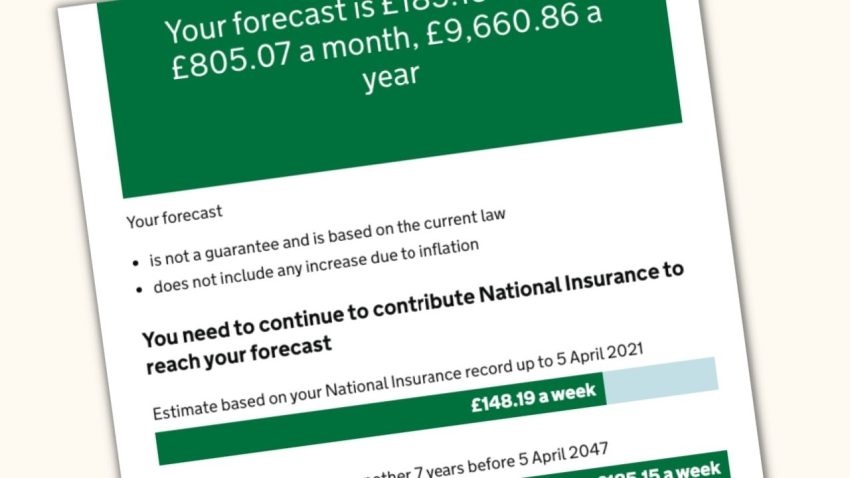
The news comes shortly after the Government looked into how many people have checked to see what they’ll get and when they can claim their state pension.
They discovered 7 million people have never looked, and that this was worst among the 45-54 year olds.
This is what’s changing and what you need to know to make sure you get everything you deserve when it comes time to retire.
Some articles on the site contain affiliate links, which provide a small commission to help fund our work. However, they won’t affect the price you pay or our editorial independence. Read more here.
What is the triple lock?
Ahead of the 2010 general election, the Conservative party promised that – if it gained power – it would ensure the state pension rose every year.
To be more exact, it promised pensions would go up by the biggest of:
- Inflation (as measured in September the year before)
- Wage rises (as measured from May to July the year before)
- 2.5%
The move has seen the basic state pension rise from £97.65 a week in 2010/11 to £184.90 now.
In 2015 a new-style pension was introduced – replacing the old system. This has risen from £155.65 a week to £241.30 a week in 10 years as a result of the triple lock.
The new double lock
The new system, proposed at the Labour Party Conference, is to replace the triple lock with a double lock.
This removes the promise that pensions would go up in line with earnings, but leaves the promises that they will rise in line with inflation or 2.5% in place.
That means pensions will not lose value compared to average prices, but they might not rise as quickly as earnings – making pensioners relatively poorer than the working age population.
For example, in the past 10 years, earnings have been higher than inflation or 2.5% five times. We’re using the earnings figure for next year’s rise too.
It’s important to add that the new system won’t come into force until 2030 – so after the next general election.
That means it will only happen if Labour win the next general election.
Get the best of our money saving content every week, straight to your inbox
Plus, new TopCashback customers get a high paying £18 welcome offer

State pension rise coming in April
From April the state pension is almost certain to rise 3.9%. That will take it to £250.71 a week based on the current payout for people who have the full amount.
People on the old basic state pension will see their payments rise to £192.11 a week.
Tax on the state pension
The rise means, for the first time, income tax will be due on the new state pension.
That’s because the increase will take total annual income from the state pension over the £12,570 annual tax-free allowance.
All money earned, including pensions, over that threshold is liable for income tax – which could see people earning nothing more than the state pension lose £93 a year to HMRC.
People on the old basic state pension won’t be affected.
State pension age changes coming too
The age you can claim your state pension is also in the process of rising – from 66 to 67.
This is being phased in slowly. People born between 6 April 1960 and 5 March 1961 will be able to claim their state pension at 66 plus a specific number of months.
People born after 5 March 1961 will reach their State Pension age at 67.
Sadly, that’s not the end of the pension age rises. There’s another rise to age 68, with people born after April 1978 set to be affected – however, future reviews may adjust this timeline potentially seeing more people affected.
You can check your personal state pension age on gov.uk.
How to qualify for the full state pension
To get the full state pension payout, you need 35 qualifying years for National Insurance. To get any state pension at all you’ll need at least 10 years’ worth of credits.
The good news is that you can qualify for a national insurance credit in a number of ways.
The simplest is to pay enough tax, so each year you earn at least £129 a week (£6,708 a year) counts.
You will automatically get a credit for years where you are:
- Claiming Universal Credit if eligible
- Claiming Child Benefit for a child under 12
- Receiving Carer’s Allowance
- Claiming Jobseeker’s Allowance (JSA)
- Receiving Employment and Support Allowance (ESA)
You can also make a claim for a credit for years where you are:
- Grandparents providing childcare
- Foster carers
- Missing past Child Benefit
- Unemployed but not on benefits
You are also allowed to simply pay to get one – that is to say make a “voluntary contribution”.
This only makes sense if you’re approaching retirement – and you can only pay for missing credits in the past 6 years.
However, if you can’t make up your gaps any other way — for example if you’re moving back to the UK having lived abroad — then it can make financial sense to pay to cover them.
There’s a full guide to making additional payments on gov.uk.
 Featured deal

 Customer rating
4.7/5
Customer rating
4.7/5
- Offerup to £300 in free shares*
- Annual fee£0
- Trading fee£0
- Minimum deposit£0
- FSCS Protected? Yes
- Transfer in existing ISA? Yes
- Interest on uninvested cash 3.75%
- Fractional shares No
- Flexible ISA Yes
- Foreign exchange fee 0.70%
- Fund fees If you invest in funds, you'll have to pay fund fees depending on the funds you choose
- Authorised and regulated by the Financial Conduct Authority Yes: FRN 944492
- Risk warning Capital at risk. The value of investments can go down as well as up.
- Offer Invest a minimum of £300 and get up to £300 in free shares. T&Cs apply. Other fees may apply.
How to claim your state pension
You don’t automatically get the state pension paid to you — you need to claim it.
You should get a letter within three months of reaching state pension age, inviting you to start claiming. If it doesn’t arrive, you can ask for one online.
Once you have the information, you can claim your state pension on the Government website, by post or over the phone.
You need your national insurance number, bank account number, and information about your marriage or civil partnership to start the claim.
Becky has written a full guide to claiming you pension if you need more details.