

How to save money on car parking

My tips to help you pay less for parking your car.

As someone who generally gets around on foot or public transport, I rarely have to deal with car parks, but when I do, it’s usually more hassle than they need to be.

For instance, last year on a weekend trip to central London we had a nightmare where the car park’s automatic number plate recognition thought I was still on one pre-booked visit rather than another. So it forced me to pay again in order to exit. Of course, me being me I complained and got my £25 back.

I’ve been to car parks that refuse coins, and others than only accept coins. And increasingly I’ve had to phone up, download apps and browse webpages – which usually come with confusing options or even complete lack of instructions!

So getting parking isn’t as simple as it used to be – and it’s also not as cheap. So here are a few ways to bring down the cost.
[box]

Some articles on the blog contain affiliate links, which provide a small commission to help fund the blog. However, they won’t affect the price you pay or the blog’s independence. Read more here.

[/box]

Use free parking

Obvious I know, but side roads are often free, even if there are yellow lines – though watch out for restrictions. I’ve got the app AppyParking, also a website, which shows where you can park for free and how long. 

Find the cheapest car parks

Similar to AppyParking is Parktopia. Simply type in the area or postcode you want to park and it’ll display all the local car parks, prices and other conditions. I tend to use both of these.

Rent someone’s drive

You can use Just Park to hire someone’s drive (or even rent out your own). Again, enter a postcode and it’ll throw up options.

Book in advance

There’s often a discount for booking in advance, especially with airport parking. HolidayExtras has a good comparison site for airports.

Look for cashback

Cashback is a must for airport parking, but you can also get around 4% or so back on advance NCP bookings.

> Not already signed up? See the latest new member offers at Quidco and TopCashback

Have the exact change

Though more and more won’t take coins, the small print for those that do often say you won’t get any change. So if you can keep a few 50p and 20ps in your glove compartment (never on show), then it’ll help if you are paying cash.

Buy a season ticket

If you’re commuting to work by car most days then hunt around for a car park which offers a season ticket reduction.

Park further away from your destination

If you have the time and are able to walk, then you should be able to get cheaper parking a little further away from prime locations such as train stations or shopping centers. This is especially true if you’re in a big city centre – and if you’re on a trip down to somewhere like London there’s no reason why you can’t park out in Zone 4 or 5, and get the tube into the centre.

Use Park & Ride

Taking the last point to an extreme, many towns will offer Park & Ride where you get a bus the last part of your journey. Again, parking here will be a lot cheaper than heading into town, where space might be limited.

Watch more of my tips on cheap Airport parking from Shop Smart Save Money (May 2019)

My top “refer-a-friend” offers

Use bespoke codes to give friends a discount and earn you some extra cash or credit.

[box]

Some articles on the blog contain affiliate links, which provide a small commission to help fund the blog. However, they won’t affect the price you pay or the blog’s independence. Read more here.

[/box]

Since you’re reading my blog, you’re no doubt already pretty savvy and like to use codes and offers to save some cash when you get the opportunity. You might not have realised it, but some of those codes were likely to be “Refer-a-friend” offers where whoever gave you the code also got a discount.

It’s usually a win-win for you and your mates. If you already use or shop with these companies it’s an easy opportunity to help out your friends and earn you a little extra too.

However, there are a few things to watch for.

  • Some of the rewards you get for referring a friend will have a minimum spend, possibly prompting you to spend money you hadn’t intended to part with
  • These won’t always be the best companies to use, both in terms of price and quality
  • You and your friend might be able to get better discounts a different way

Where to get refer-a-friend bonuses

It’s actually surprising where you can find these schemes. From your physiotherapist through to shops like Habitat and Glasses Direct it’s possible to get discounts for you and your friends.

The key is to check in your apps and accounts to see if there are unique codes for you to share. Or if you want to signup to a new service, see if any mates can refer you.

I’ve listed below the schemes I use, and a few others which could be great to explore. If I can share my code to get you a saving it’s below, then once you’ve signed up you can share your own codes with your friends.

Banking refer-a-friend picks

Nationwide – £100 each

If you bank with Nationwide, you and your friend can both get £100 cash through a referral. The FlexDirect is a decent account too as you can earn 5% interest for the first year. Sadly I can’t share this one on the blog, but if you know me just shout and I’ll send you my code!

Santander – £50 Amazon voucher each

Recommend a mate to switch their bank account to Santander and you’ll both get £50 in Amazon vouchers. There are better switching offers out there for them though. However, existing Santander account holders who are recommended by a friend and move another account over into the Santander one can claim the reward too. This one ends 18th June 2019.

TSB – £75 each

Until 30th June 2019, switch to a TSB Classic Plus account with a referral link and you and your friend will both get £75! You’ll also get 3% interest on savings up to £1,500. Again, if you know me, shout and I’ll send you a link!

American Express – around £25 each

This varies depending on which card you have. With my Amex Platinum Cashback card it’s £25 for both the referrer and the friend, with others it’s Amex or Avios points. Again, this can only be shared with friends and family.

Tandem credit card – £10 Amazon voucher

My back-up cashback credit card for when I can’t use my Amex, Tandem offers 0.5% back on purchase – and new users can get a £10 Amazon voucher using a friend’s referral link. Here’s mine!

Tesco credit card – 1,000 Clubcard points

Tesco offers a similar scheme to earn 1,000 Clubcard points or £10 Tesco gift card each if you refer it’s credit card or insurance policies.

Monzo – £5 each

This bank doesn’t require you to switch your old account over –  you just need to make a transaction with your new debit card. Do that and you both get a fiver.

Chip – 1% boost on your interest

Chip is a savings app where it automatically moves money from your current account to a savings account. I’ve been using it for a few years and it’s a good way to save. The basic interest rate is 1% (though I’ve an exclusive code – CLEVER3 – to start you at 3%), but for every friend you refer, you both get an extra 1% (up to 5%)  It’s available via iOs or Android.

Bill refer-a-friend picks

Sky TV – £75 each

If you get a mate to subscribe to Sky you both get a £75 prepaid Mastercard. Great for you, but they might be able to get a better deal through cashback sites.

Virgin offers £50 each, though your friend will definitely be better off with cashback deals.

Mobiles – up to £40 voucher each

If you get your mobile with Three you can both get a £25 Amazon voucher through its refer-a-friend offer.

O2’s Tell a friend scheme offers £25 in vouchers too, while giffgaff gives you both £5.

Gas and electricity – between £20 and £50 voucher

You can get vouchers or credit if you get a friend to switch their energy supplier, including EDF, Ovo and First Utility. Of course, the key here is to get your friend to compare prices first, and they might get a better cashback deal via sites like CheapEnergyClub.

One that does look good is via Bulb, as you both get £50 which is usually better than cashback rates.

Money saving apps and websites refer-a-friend picks

AirBnB – £23 for you, £34 for them

You can get your friends £25 off their first stay and £9 off an experience, and in return you £23.

Topcashback & Quidco – Up to £20 for you

I’m a big fan of sites like Quidco and Topcashback. The latter is best for referrals as there are sometimes £5 incentives for friends, though most of the time it’s just you who will benefit. Premium members get £7.50 for every friend who signs up and earns £10 in cashback, and there are offers that increase it to £20.

However, new members are usually better off signing up on their own and earning up to £17 of free cash.

Shopmium – Freebies for them, £3 credit for you

This supermarket cashback app gives new users a free bar of chocolate (at the moment it’s Lindt) when they use a refer-a-friend code. In return, you get £3 credit on the app. Frustratingly you can’t cash this out. Instead you get the full cashback when you buy one of the featured products.

> Download Shopmium and get a free Nutella pot (use code KHMYEEFW)


Do you use any other referral schemes? Share them in the comments below

Credit cards, Section 75 and your consumer rights

Buy something worth more than £100 with a credit card and you could get your money back if it’s broken, doesn’t get delivered or the company goes bust.

I’ve written a few times about how a credit card can save you money. They can earn you cashback. They can cut nasty overseas spending charges. They can even act as 0% interest loans or help build up your credit rating.

Of course, credit cards won’t be for everyone – and if you can’t afford to pay off the full amount each month they’re almost always worth avoiding.

But there’s one benefit which it’s really worth having a credit card for – and it’s called Section 75.

Some articles on the site contain affiliate links, which provide a small commission to help fund our work. However, they won’t affect the price you pay or our editorial independence. Read more here.

What is Section 75 and how does it work?

It’s not exactly a sexy name, but it’s a very powerful part of the Consumer Credit Act. This means it’s part of law.

If you buy something that costs more than £100 and less than £30,000 with a credit card, the credit card company is equally liable for your purchases with whoever sold it to you.

So if there’s something wrong with a purchase and you aren’t having any luck with the retailer, you can ask the credit card company to refund you.

And since it’s the law, they have to do it.

It doesn’t cost you anything

As long as the item you buy is over £100 you get the protection, and it won’t cost you anything! Plus all credit cards have to offer this, though it’s a different story for charge cards and some store cards.

You only need to spend £1

If you’re buying something particularly expensive you might find you don’t have the credit limit to buy it outright with your credit card.

Likewise, some retailers or businesses might tell you they won’t accept credit cards or charge you a fee.

Neither means you can’t get the Section 75 protection. As long as the item costs more than £100, you only need to pay for part of it on a credit card to be covered for the total amount. We did this for our wedding reception venue.

It’s single items, not total spend that count

Let’s say you’re out shopping and buy a suit jacket for £60 and suit trousers for £40. That’s £100 on your credit card. But since neither item cost more than £100, this purchase isn’t covered. However, buy a suit for £100 as a single item and you will get the protection.

Secondary cardholders don’t count

I’ve got an Amex cashback credit card. To maximise the money we make Becky has a supplementary card in her name. So when she spends we get more cashback.

But for some weird reason, anything she buys isn’t protected unless there’s proof I’m affected. So if she bought me something it would be covered, but something for herself wouldn’t.

Watch out for PayPal

You only get Section 75 protection if you spend directly on your card. This means PayPal and other middlemen like Groupon can sometimes break that link – meaning you might not get the cover.

It’s the same with travel money cards like Curve. That doesn’t mean you shouldn’t use these services as there are advantages to them, but it something worth considering.

However, Apple Pay and Android Pay don’t break the chain, so you still get Section 75 protection on these purchases over £100.

Chargeback could protect you if you spend less than £100

There’s a scheme called Chargeback that could get you a refund if your purchases were less than £100.

Here you ask the bank to claim the money the back from the trader’s bank on your behalf. It works for both debit and credit cards as long you claim within 120 days.

However, Chargeback isn’t enforced with a law so there’s no guarantee you will get your money back.

Fraudulent payments can be protected too

This isn’t part of Section 75, but there’s an extra protection bonus that comes with credit cards. The maximum you are liable for if your credit card is stolen is £50. And that’s only if money has been spent on it before you report it missing.

Of course, it’s different if you were negligible, say by leaving the PIN on a note with the card. Yes, people do this. I know it can be difficult to remember all your PINs (I completely forgot one the other week), but at least try to not keep any reminders with the card.

How to go to live football matches for less

Even though there are loads of footy matches shown on TV, it’s never quite the same as watching it live at a stadium. But it can be pricey to support your team in person.

I’m a Crystal Palace fan, and heading to Selhurst Park is one of my ‘luxuries’, especially now that I’ve got to factor in a train from Yorkshire down to London.

Fortunately, ticket prices aren’t too bad, especially when compared to other London Premier League teams, as the BBC Cost of Football report from a few years ago showed. Things are likely to have changed a little since then, but the research showed we had the cheapest cup of tea (just £1!) but sold the priciest pies (at £4).

But the expenses don’t stop there. You can add on top buying things like programmes and maybe a shirt too. And lets not forget actually getting to the match.

If these spiralling costs put you off going to matches, here’s my starting 11 of ways to save money at football games.

Getting your ticket

Buy online or in person rather than on the phone

Something I don’t like about Palace is that the box office is 10p a minute and normal ways around it (such as SayNoTo0800 don’t work). However, going through their online service is quick, easy – and cheaper.

Share and spread the cost of a season ticket

Season tickets will always work out cheaper per ticket. But if it’s too much money, or you don’t have the time, consider getting a couple between a group of you. You won’t go to every game but you will pay less per ticket.

Alternatively (or as well) 0% credit cards let you make a big purchase and not get charged interest on the full amount – as long as you make the minimum repayments each month. So you could get a season ticket like this to take advantage of the lower matchday price. Only do this if you can be sure you’ll have enough to pay it off in full at the end of the 0% period.

If you can’t make a game see if the club lets you sell back seats. It varies from club to club, but if they do it you’ll only get the money if they manage to sell it. Sold out matches are your best bet.

Get a membership

A club membership should give you advance booking, essential for popular games so you can avoid touts. Check too for a discount in the club shop, free online match programmes or even a match day discount.

Go to away games

The Premier League has a cap of £30 on away games, making it a much cheaper option than most home games. Sadly there isn’t a cap in other leagues.

In the past I’ve even picked up tickets for the odd game from sites like Groupon, so it’s worth checking them out and signing up for email updates, though this is more likely for matches lower down the leagues.

Check for concession prices

My student card (from the now closed NUS card loophole) is still valid, and my dad is retired, so we save £10 to £15 a ticket with a student and senior discount respectively. It’s always worth checking just what is available.

Go on family days

Palace used to do a ‘Kids for a quid’ day, and many clubs around the country do something similar. If you’ve got a family this cuts the cost dramatically.

Getting there

Book your transport well in advance

If you’re going by train, book your ticket as soon as you know a match isn’t going to be moved for TV. The broadcasters normally announce the fixture changes a couple of months in advance so you should be able to pick up advance fairs.

Look for coach travel deals with the club

It can sometimes be tough to get fans to travel, particularly if it involves going long distances or are mid-week late-kickoffs. So clubs might put on cheap, or even free coach travel. If you’re a member you should find out about this stuff, but definitely sign up to any mailing lists.

When you’re at the game

Buy a fanzine rather than a programme

According to the BBC report, Premier League programmes are usually £3.50, while Championship, League One and League two clubs tend to charge £3. With so much information online you rarely get anything new in a programme. But you do in a fanzine. Palace has a great fan-produced magazine called Five Year Plan. It’s only £2 and often more entertaining than the same old content from official programmes. There are hundreds out there, whatever your team. Just keep a lookout at the turnstiles before going in.

If you want team sheets and season stats, use the Sky Sports Score Centre app and Soccerbase.com.

Don’t buy food and drink at the game

Ok, it might be part of the ritual, but seeing as you can’t take your pint (or more likely plastic bottle) of beer onto the stands you’re going to spend 10 minutes queuing at halftime and five minutes necking it. It’s a waste of time, and you’ll avoid overpaying for a pretty rancid pint.

You can save on soft drinks as most clubs will let you bring in a sealed 500ml bottle of water.

And unless it’s an early or late kick-off, match time is hardly lunchtime. So eat before or after. You’ll get better food for better value. And you can avoid paying £4 for a crap pie.

Shop around for your shirt

Unless you’ve got a decent discount at the Club shop with a season ticket or membership, you’ll probably save money on your kit if you shop around. As I wrote ahead of last year’s World Cup, there are ways to save on personalising your shirt and some decent deals on retro kits.

Cheapest ways to watch it on TV

The atmosphere and experience are nowhere near the same, but you can get cheap day passes to watch Sky Sports at home for £8.99 (if not lower via special offers – see the latest Now TV deals here).

Or why not see if a friend or family member has Sky Sports or BT Internet and will lend you their log-in details? Bung them a fiver and everyone’s happy. Here’s my full Cheapest way to watch Premier League and other football on TV article.

Contactless payment declined? You might just need to enter your PIN

New rules affecting all the banks are being introduced that should make our banking more secure. But the extra steps you’ll need to take could be a bit of a pain.

You might have had a letter or text from your bank about some new anti-fraud measures. It probably says there will be changes to how you log on (here’s my letter from First Direct). You might have glanced at it, but you probably didn’t think much of it. I’ll get on to what this could mean for you in a bit.

And it’s just one change coming your way. As part of the Strong Customer Authentication (SCA) measures you could also barriers to spending in shops and online – the biggest concerns contactless payments.

Contactless payment change

If you’re out shopping you could now find that your debit and credit cards are declined. And that’s not because you’re out of money.

One of the new rules limits how many times a card an be used without some kind of authorisation. Already we have to use our PIN for transactions over £30, but you could also now find that you are asked for a PIN when using contactless.

After five contactless payments have been made, or £135 (though some banks might lower this amount), you’ll need to insert your card and enter your PIN. Which is fine if you remember this. But if you don’t, you won’t get a nudge. Instead, you’ll simply see your purchase declined.

So if you don’t recall whether it’s use number five or six, then this could cause confusion and embarrassment. Of course once we get used to this, it’ll be like those GDPR pop-ups on websites and just be normal. But for now I can imagine it’ll cause all sorts of problems. So spread the word!

Not everything will be rejected though. For example, you’ll still be able to tap and pay on public transport, such as the London Underground and buses, and things like parking meters.

And there is a weird workaround for this. The limit doesn’t apply when using the digital wallet on your phone, and that’s because you’ll be using fingerprint or face approval.

Other changes

The SCA changes were all meant to come into play from the 14th September 2019 – but as so many banks weren’t ready the deadline has been moved until March 2021. Even so, some banks are implementing the extra security measures now.

In essence, every transaction needs to have two forms of authorisation from three choices. The first is your PIN or password. The second is a device, such as a card reader, and the third is using something like fingerprint or voice recognition.

In most cases it means you really should download and set up your banking app if you haven’t done this yet. Without it you might struggle to get into your accounts or make payments.

The exceptions include subscriptions, direct debits and standing orders, which only need authorisation once, and the first five contactless payments.

Here are some of the things to expect between now and March 2021.

Online transactions

You’ll no longer be able to just enter your card details and click pay online. An extra step will now be added by all banks. In most cases it’ll be in the form of a one-time passcode (OTP) that is texted to you when you try to use your card.

Some banks have been doing this for a while, and in my experience, it’s proven pretty quick and easy to complete a transaction. Of course, you do need some mobile phone signal, but if you’re online to shop, then you can connect your phone too.

Logging onto banking sites

There’s a good chance you’ll also need to use a code generated by a card reader, your mobile banking app or input a code you are texted in order to log into your bank account online.

If you already do this, then there’s no change. But other banks will start to ask you to do this. 

Since I’ve got so many different bank accounts, I’m used to different log in processes, and using the card reader has always frustrated me, but for the sake of security, it’s no doubt worth the hassle.

It’s not clear how this affects banking apps as not everyone will have a device that allows for fingerprint and face recognition. I assume a one-time password will be texted to your handset to get you in.

New 16 -17 Saver Railcard – how it works

Get 50% off rail travel if you’re under 18.

Railcards are a great way to cut the price of train travel, and following the launch of the 26-30 Railcard last year, young people are getting another rail discount with the launch of a new railcard for 16 and 17-year-olds.

It’s called the 16-17 Saver Card and it’ll let users save 50% on most rail fares. It’s not free, but with train ticket so expensive it won’t take many journeys to recoup the cash paid and then start saving.

What you need to know about the 16-17 Saver card

Here’s the low-down:

Who can get a 16-17 Saver card

As long as you are aged 16 or 17 years old you can buy one of these new railcards. However the card will expire on your 18th birthday. You can order one online up to 14-days before your 16th birthday. You also need to be a UK resident.

How much will the 16-17 Saver railcard cost?

A card costs £30 for 12 months, or until you turn 18.

When can you use a 16-17 railcard?

You can start using the card on 2nd September 2019 and it’s valid all day, every day.  It’s only valid for travel in England, Scotland and Wales.

You can only buy tickets for travel for dates where you’ll have a valid 16-17 Saver card. If it expires before you’re booked to travel you’ll need to renew it.

The card also won’t be valid for single or travelcard fares in London, though if you’re buying a ticket that starts at a National Rail station you can include a travelcard and get the discount. And if you live in a London borough you can get a Zip Oyster photocard which will save you money on London travel.

How much will you save?

You’ll save 50% on anytime, off-peak, advance and even season tickets. The later in particular could be a massive amount of cash if you travel to school or college via train. Plus season tickets bought with a 16-17 railcard are valid for four months after the holder turns 18.

How to get a 16-17 Saver railcard

The new railcards are available to buy from the 20th August. You can apply online which will provide you with a digital railcard that you’ll use on your phone. Or you can apply by phone on 0345 301 1656. You can request a physical card if you prefer. The cards won’t be available at stations.

You’ll need to have ID, such as a passport or driving licence, and a photo when you apply.

How is it different from the 16-25 railcard?

For a start you’ll save more money. with this new railcard. The 16-25 railcard (which used to be called the Young Person’s Railcard) only discounts fares by a third – and has a £12 minimum before 10am on weekdays.

However, since the 16-17 card expires when you turn 18, it might be better to buy a 16-25 railcard if you’re more than a few months beyond your 17th birthday as that card will last the full 12 months.

The best option really depends on how often you’ll travel by train in the run-up to turning 18 as the fare saving is bigger with the 16-17 card.

What about under 16s?

If you (or your kids) are under 16 then you’ll already be able to take advantage of 50% reductions on most fares as they can buy child tickets. Under fives can travel for free as long as they’re accompanied (though when wouldn’t they?).

Other railcards

There are a number of other railcards available for people of all ages. These cards are valid for 12 months and should save you a third on most fares if you fit the criteria. 

Railcards include:

  • Friends & Family Railcard
  • 18-25 Railcard
  • 26-30 Railcard
  • NetworkRailcard (South East trains only)
  • Disabled Persons Railcard
  • Senior Railcard
  • Two Together Railcard

Offers to save more run regularly through the year, and I’ll update my travel deals page if I spot them.

> Buy a railcard

How to save money with the world food aisle

It’s not just the weird and wonderful stocked in the world food aisle at the supermarket, some regular staples can be picked up for a fraction of the price.

It’s easy to forget that when you visit the supermarket some items aren’t always where you’d expect them. Yes, you know where to find the rice say, or the herbs and spices. But the same products, albeit different brands, could also be sitting around the corner in a completely different aisle.

It’s known as the world food aisle and you’ve probably walked passed a number of times, thinking it’s not for you. Random American snacks, strange Caribbean drinks, bizarre Indonesian instant noodles… the list of things you don’t recognise goes on.

But if you take a moment to look properly, you’ll also see everything from gherkins to coconut milk next to a huge choice of spices and sauces. They’ve usually been imported, but sometimes they’re made in the UK but targetted at various ethnic and immigrant groups. And they can be much, much cheaper than their UK counterparts.

What you’ll find in the world food aisle 

On whole, it’s long life products that you’ll find. So we’re talking jars, tins and food that have long expiration dates (handy for any emergency stockpiles!). Common items include:

  • Grains such as rice and couscous
  • Nuts and pulses such as almonds and lentils
  • Tins such as coconut milk and chickpeas
  • Herbs and spices such as cinnamon sticks and ground coriander
  • Sauces such as soy sauce and lemon juice
  • Jars such as tahini and olives
  • Oils such as sunflower and vegetable

And of course, you’ll also be able to pick up things you won’t find elsewhere. This isn’t just Polish jaffa cakes. You can get non-standard items such as tinned mango pulp or pepper paste.

Often the packs are bigger too. So rather than a small 38g jar of chilli powder, you can buy a 400g bag. Or there are massive 10kg bags of rice.

It’s also worth checking the refrigerated and frozen sections as you might find a range of products there too – though this is often dependent on the cultural make-up of the local area.

How much money you can save 

Here are just a few examples I spotted online across a range of supermarkets.

Tinned chopped tomatoes (Asda)

  • Napolina – £1 for 400g (£2.50 per kg)
  • Asda own brand – 55p for 400g (£1.38 per kg)
  • KTC – 39p per 400g (97.5p per kg)

Curry powder (Morrisons)

  • Schwartz – £1.65 for 38g (43.4p per 10g)
  • Morrisons own brand – £1.13 for 90g (12.6p per 10g)
  • Rajah – £50p per 100g (5p per 10g)

Coconut milk (Sainsbury’s)

  • Amoy – £1.80 for 400ml (45p per 100ml)
  • Sainsbury’s own brand – £1 for 400ml (36p per 100ml)
  • Dunn’s River – £75p for 400ml (19p per 100ml)

Jalapenos (Tesco)

  • Old El Paso – £1.50 for 215g (70p per 100g)
  • Tesco own brand – £1 for 220g (45 per 100g)
  • Aleyna – £1 for 480g (21p per 100g)

It won’t always be the case that the world food item or the larger item is cheaper. Special offers elsewhere in the supermarket can bring the prices down, and some “basic” own-brand items could be cheaper too, so do check the main shelves.

The other important thing to remember here is only to buy the bigger bags if you’re confident you’ll use them before the expiration date (or soon after).

Where to find the world food products

In supermarkets

The big supermarkets often have a set aisle full of these products from loads of different continents and cultures, whether Kosher biscuits or Mediterranean falafel mix. 

Smaller shops could just have a few products dotted around, and in all likelihood, you’ll have to hunt for them. Look in the most random areas – they could be aisles away from where you’d expect.

In rare circumstances, you *might* even have the world food items close to the corresponding standard versions. This could even mean that the Asian products are right by the usual Indian/Chinese/Thai products – but there’s no guarantee.

Do remember to look at the top and bottom shelves as they could be hidden in plain sight (as shoppers we tend to only look at eye-level). And check behind you too. At our Asda, the Asian spices are opposite the standard herbs and spices.

Online supermarkets

Some supermarkets have a section you can browse which groups all the world food items together. And if you search for something, say rice, you’ll get all the different options – standard and world food – together. This really helps! 

You can browse online offerings at some of the big supermarkets here:

How to check if the world food aisle is cheaper

Though items often are cheaper, don’t assume they always will be. You’re more likely to find special offers on branded, everyday versions of the products than the world food equivalents. Fortunately, there’s a simple trick to help you compare prices.

Compare the price per unit

On every supermarket label, you should spot a price per unit. This could be per 100g, or maybe per litre. This helps you compare different size packs. If the items are in separate parts of the supermarket you could always snap a photo of the products you first see, and then check the price against the selling price you spot elsewhere in the supermarket.

It’s not a perfect system though. Sometimes you might find different weights used (eg KG vs grams), or even the number in a packet vs the weight. As my Tweet below shows, they can sometimes even be wrong!

I’ve written more in detail on these problems and how you can use Price Per Unit to your advantage.

The problem with price per unit food comparisons


Save money on the motorway

If you’re likely to be bombing up and down the motorway soon, I’ve got a handful of tricks to help you avoid overpaying on everything from fuel to food.

We all know motorway service stations are expensive. It might seem like we’re being ripped off, and there’s certainly a element of the operators knowing they’ve got a captive market. But in part they need to charge more to  cover the costs that go into building and then running the businesses.

You might think there’s not much you can do about it. But you can. Here are some tricks and tools you can use to either avoid service stations completely, or at least reduce how much money you spend at them.

Plan before you leave

The easiest way to avoid paying more than you need to requires just a tiny bit of forward planning.

Petrol

If you know you don’t have enough in the tank to get you where you need to go, then plan to fill up. If that means you have to go slightly out of your way then do it it can be worth it to avoid the markup on the motorway which is going to be huge. We’re potentially talking around 20 to 30p more per litre on the motorway than at one run by a  supermarket.

I’ve written before about finding the best petrol prices near you, but the main websites to help compare prices are Confused.com and Petrol Prices.com. 

Food & drink

Personally, I hate eating at service stations. It’s either a crap pasty or sarnie, or a McDonalds, which I try to avoid at the best of times. I’d much rather have made my own packed lunch. It’s going to be tastier and cheaper, and it’ll be quicker than queuing up and waiting for your order.

On a long journey, I’ll always bring a couple of reusable water bottles that I’ve filled up. I don’t drink hot drinks, but we’ll often make a cup of tea for Becky in a travel mug.

If you really can’t be bothered with either of those, then at least grab a meal deal from Boots or the supermarket. It’ll be a fraction of the price you’ll pay at a service station.

Go “off-junction” 

If you haven’t got the time or inclination to prepare in advance of your trip, you can still cut what you pay by travelling just a short way off the motorway.

There are a couple of sites to help you identify what facilities are available – and they’re also handy if you’re desperate for the loo but there isn’t a service station for ages. Of course, if you’re driving on your own these aren’t much use! But if you do have someone with you, then just get them to load one up on their phone.

Just off the Junction website

This website aims to list alternative facilities within a five-minute drive of a junction. It’s good for finding petrol stations and supermarkets. With other places to eat they tend to be pubs and restaurants, which might not be the most convenient if you’re in a rush.

You also need to bear in mind a few potential risks. First, check if there’s access both north and southbound. Some exits will only be on one side of a motorway. And second, it’s possible the information could be out of date. You can mitigate the latter by giving them a quick call.

> Visit Just of the Junction

Next Junction app

Again, I’m not sure how often it’s updated (so it’s worth checking), but this free app is very easy to use. You can just look at what’s coming at the next junction, or search by motorway and then junction, to see what alternatives are nearby. You can also favourite certain locations – handy if you’re regularly making the same trip. 

> Download Next Junction

On the motorway

If you really have to use a service station, then these simple tips should help.

Don’t fill up at the pumps

It’s always tempting to fill up at a petrol station – it saves you having to stop again at the very least. But don’t. Just put in enough to get you to your destination, which in all likelihood will have cheaper pumps.

Use your loyalty schemes

If you are going to get petrol at a station on the motorway you may as well get some loyalty points while you’re at it. Apps like Stocard can let you store multiple cards digitally so you don’t need to carry loads around with you.

Shop around

Somewhere like a WH Smiths is expensive at the best of times for snacks and sweets. It’s even pricier on a motorway. So just do a quick look around at all your options as you could be getting a better deal elsewhere at the service station.

Pick the right service station

If you’d rather there was a Waitrose or McDonalds than an M&S or Burger King, then you can use the MotorwayServicesOnline website to see what’s where. There are also lists of other facilities such as cash machines, showers, electric car charging and so on.

Plus not all the places you stop on the motorway are as boring and grey as you’d expect. There are some independently run ones out there, including the pretty fantastic Gloucester Services on the M5, which is hidden under a green hill a bit like the Teletubbies home. It’s got a fab farm shop, a nice mini-lake to eat by and a decent enough cafe – though of course it’s not necessarily going to be any cheaper than the others! 

Be a star baker on a budget

I wanted to have a post about baking on a budget, and the best person to write it is my wife Becky – a brilliant baker. So over to Mrs Webb!

The Great British Bake Off is back! To celebrate GBBO’s return I thought I’d show you just how much cheaper, and tastier, it can be to make your own creations

Andy and I are big fans of GBBO and we thought last year’s series was a return to form. If you’re also a fan and you feel like mixing some muffins or perfecting your profiteroles, we’ve some tips and tricks to get more for your dough, whatever your level.

Get the right equipment to ensure no soggy bottoms!

This doesn’t need to be as expensive as it sounds. We discovered the TK Maxx baking section on a trip to the Charing Cross Road store and have been converted – not hard when you can get really excellent quality essentials at hefty discounts.

For example, they have brands such as Le Creuset, Joseph Joseph, Jamie Oliver and Tala and everything is brand new and in perfectly good condition. Stock changes regularly but recently we’ve seen Salter weighing scales (the most accurate scales) for 50% off, classic GBBO bakeware with a significant reduction and if you like to practice your icing techniques a decorating turntable at nearly 60% off. Paul and Mary, sorry Paul and Prue, would be proud.

Baking goods aren’t just in TK Maxx stores, you can also see what bargains are available online.

Baking books are great, but can you make do with online?

Although admittedly it is lovely to have shelves adorned with baking and cookery books by the latest culinary experts, this can be a pricey hobby. Check out The Book People for real bargains if you like the weight and feel of a real cookbook. Titles include the new book from GBBO faves such as last year’s finalist Kim Joy (her Baking With Kim-Joy is currently £6.99) and previous winner Nadia Hussain (you can get Time to Eat, also brand new for £7.99)

However, if you need expertise but without the squeeze on your finances then I always find online baking sites really handy. Most of the top pastry chefs or TV cooks have their own websites nowadays and they are mostly bang up to date with that must-try recipe they made on their latest episode. The BBC Food and Good Food websites are a goldmine of brilliant information about all things baking – you can even search by ingredient(s). Or search by chef if you have a bit of a chef-y crush (like me on Marcus Wareing). Jamie Oliver’s website is great as is Nigella Lawson’s.

It’s always worth keeping an eye out for independent food bloggers like Joy the Baker or Bakerella. There are some fab vegan blogs too – This Rawsome Vegan Life or the more widely-known Deliciously Ella are my top picks. The picture of the raw date and hazelnut brownies will make you drool and they are more or less sin-free!

You don’t need expensive ingredients or equipment

Odds and ends from the fridge and basic ingredients all make treats as tasty as if you’d used premium products. And it doesn’t have to be harder to use some elbow grease. There are some easy recipes that take very little effort, like these for soda bread and cookies.

I often make these brownies that involve just five ingredients, a bowl to mix it all together, a spoon, and a tray to bake them in (oh, and an oven!):

Becky’s brownies

Ingredients:

  • 300g chocolate (whatever brand you like but must be dark or milk, not white)
  • 300g unsalted butter
  • 450g sugar
  • 5 large eggs
  • 200g plain flour

Method:

  • Melt the chocolate and butter together in a bowl in the microwave, in one-minute bursts on half power
  • In another bowl, beat the eggs with the sugar
  • Pour the melted chocolate mixture into the sugar and eggs and mix well
  • Sift in the flour and mix well until all flour has disappeared
  • Pour into a square/rectangular tin lined with greaseproof paper
  • Bake in the oven heated to 180 degrees C for 45mins to 1 hour
  • Once cooled, cut into 12 to 16 squares (depending on how big you like your brownies)

But if do you want a fancy mixer…

I sometimes make and sell celebration cakes so I’ve two Kenwood KMix stand mixers. These are great for everyday baking too, and they are far more affordable than the Kitchenaid ones you see on Bake Off which retail for between £400 and £600. In fact, it’s now quite common during sales to be able to pick one up for under £200 (Andy has spotted them for as low as £160 – keep an eye on his homes deals page for the next bargains he finds). 

We can’t promise they’ll turn you into the next Nadiya but they’ll certainly make your life easier (and your kitchen look good).

Go on a course to improve your skills

If you’d like to become a better baker, going on a course would be a good idea. Lots of colleges around the country offer baking courses – from one day cake decorating tutorials to year-long diplomas, there is something for everyone at all levels. Courses can be expensive but Groupon and other voucher sites often have great offers available.

If you are on JSA or a student you can often get an amazing discount or sometimes even get a place on a course for free. I was looking for work and claiming Jobseeker’s Allowance a few years ago and completed an NVQ Level Three course at Westminster Kingsway College for just £225 when the full-price course would have cost £1300.

Or you could treat yourself to a day at GBBO series three winner, John Whaite’s cookery school and learn how to bake and decorate perfect cakes, pastries and bread.

Or just watch the professionals on YouTube

If you don’t want to be taught in person then you should check out YouTube. There are loads of great ‘how to’ videos on there from big name chefs to ordinary people like you and me just baking at home. Here is the video from Paul Hollywood that taught me how to make a quick puff pastry.

Make some cash with a stall or bake sale

Bake stall
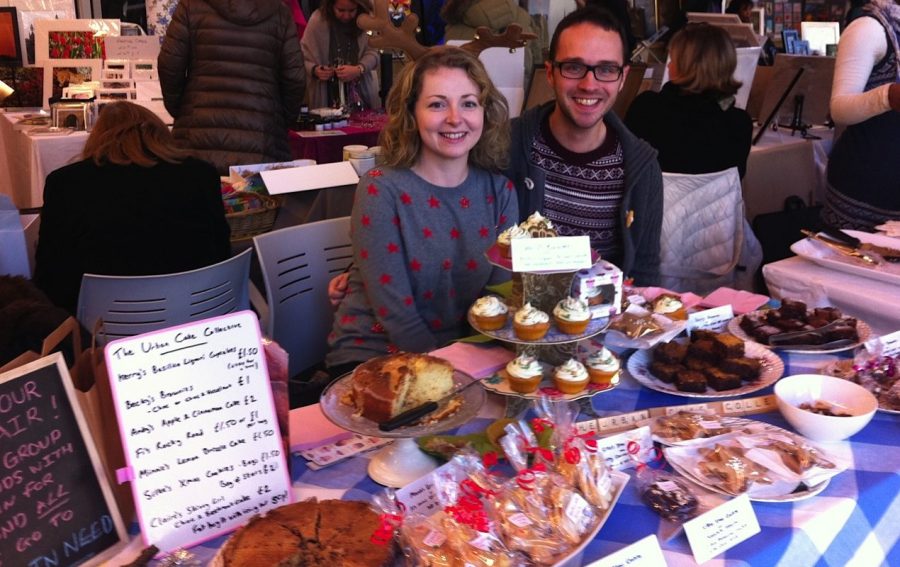
Andy and me back in 2011 with our cake stall

If you have a bit of a talent, some time on your hands, and people skills then why not have a go at holding a bake sale or getting a pitch at a local market to sell your wares? This way you can make a bit of cash to fund your baking habit.

We did this a couple of years ago (OK, more than a couple of years…) at a small local market and sold out on our first attempt. That’s where the pic above was taken. It is a fair bit of work to make enough to have a stall, but if you get a couple of friends to help you then you’ll easily have enough sweet treats to sell.

You can find out more about starting your own cake stall from former GBBO runner-up Kimberley Wilson here. Or just head down to your nearest regular market and ask the stall owners how they first started.

Oh, and quick plug for Andy’s sister’s delicious baking company Wren Cakes. If you live in Streatham or South London you should go buy one of her cakes!