





Council tax bills have risen again this year, but if your council tax band is incorrect, you might be paying too much.
Many homes in the UK are under the wrong council tax band. If you successfully challenge the band, your local council may lower your bills and pay you a refund.
But confusingly, in some cases, your bills could go up. Here we go through how to do this, and what to be aware of before you start.
Some articles on the site contain affiliate links, which provide a small commission to help fund our work. However, they won’t affect the price you pay or our editorial independence. Read more here.
What is a council tax band?
A council tax band is a label given to all residential properties in England, Scotland and Wales based on their size and value.
There are eight bands, from A to H, and the band your house is in relates to how much council tax you pay each year. Homes in band A have the cheapest council tax bills and those in H the most expensive.
The amount of council tax you pay is also decided by your local council, so the amount you pay will depend on where you live in the country.
What council tax band am I in?
You can find out your council tax band by checking your council tax bill. But if you don’t have one nearby, you can also use the government’s website to check.
If you visit Gov.uk or the Scottish Assessors Association, you can find out your council tax band after you’ve put your address or postcode into the online tools.
What does council tax pay for?
Homeowners and renters must pay council tax, unless they are exempt, and this money is collected by the government.
It is then spent by local councils on a range of things including road maintenance, schools, social care, waste management and fire and police services.
Council tax replaced poll tax in 1993 which was a flat fee charged to all adults introduced by Margaret Thatcher.
Get the best of our money saving content every week, straight to your inbox
Plus, new TopCashback customers get a high paying £18 welcome offer

How are council tax bands calculated?
Council tax bands are calculated by looking at the value of a property. The higher the value, the higher the council tax bill.
It was introduced on 1 April, 1993, to replace the Community Charge (also known as poll tax), and prices were set based on their value in 1991.
When council tax was introduced properties across the UK were valued and then placed in a council tax band.
However, many of these are now out of date leading to properties being in the wrong band. In Wales properties were reassessed in 2005 but in Scotland and England lots of homes remain in incorrect bands.
How much is council tax?
The amount of council tax you pay depends on the band your home is in and also your local council.
Prices have recently gone up across the UK. In England councils are allowed to raise bills by up to 4.99% each year and the majority have done this and some have opted for higher increases, including 8.99% in Somerset and Shropshire.
The average rise in Wales was 4.9% while in Scotland most councils increased prices by over 6%.
There are council tax discounts available for some people, such as those who live alone and students.
Listen to our latest podcast: Council tax rules changed after 30 years – what’s still broken
Can I challenge my council tax band?
If you think your property is in the wrong council tax band you can challenge this. If your local council agrees it can officially change the home’s band and your bills can go down. However, if it finds it to be more expensive, your band could change and you could end up paying more council tax.
Data from the government shows that around 27% of people who make a council tax challenge see their bills going down, while in 65% of cases no change is made so while it can happen – it’s not always the case.
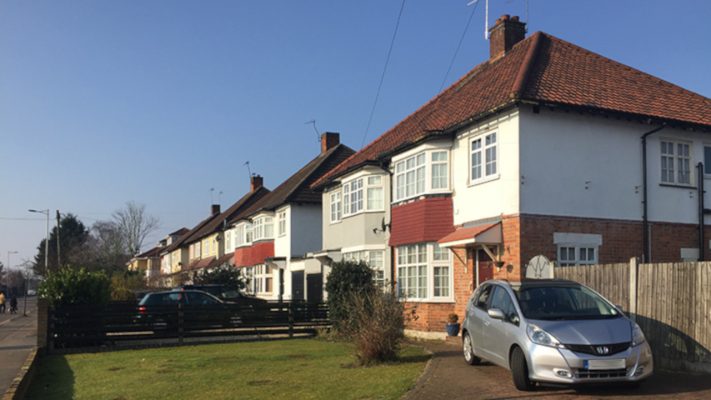
One of the key signs your home is in the wrong band is if your neighbours, in homes similar to yours, are paying a different amount for council tax. They could be in a different band to you but your homes may be pretty much identical, for example.
You can check which band they’re in through the government council tax website and the homes need to be as similar as possible with the same number of rooms and floor area. If you find that one of these properties is in a different council tax band to you, and crucially paying less, you can make a challenge.
Another way to check if you might be in the wrong band is by looking at your property’s value (and the value of your neighbour’s homes) to check how much it was worth in 1991 (or 2003 in Wales), when the official council tax bands were set up.
You can do this by:
- Looking at the sale date if you bought your home after 1991
- Use an online estate agent, such as Rightmove or Zoopla, to find out the price nearby properties have sold for
If you then use an online inflation calculator to find out the property’s value in 1991 and check this against the official band your home was put in at the time, shown below.
| Council Tax band | Properties in England – value in April 1991 | Properties in Wales – value in April 2003 |
| A | Up to £40,000 | Up to £44,000 |
| B | More than £40,000 and up to £52,000 | More than £44,000 and up to £65,000 |
| C | More than £52,000 and up to £68,000 | More than £65,000 and up to £91,000 |
| D | More than £68,000 and up to £88,000 | More than £91,000 and up to £123,000 |
| E | More than £88,000 and up to £120,000 | More than £123,000 and up to £162,000 |
| F | More than £120,000 and up to £160,000 | More than £162,000 and up to £223,000 |
| G | More than £160,000 and up to £320,000 | More than £223,000 and up to £324,000 |
| H | More than £320,000 | More than £324,000 and up to £424,000 |
| I | Not applicable | More than £424,000 |
If you find your home is in a higher band to your neighbours, and it’s is in the wrong band when based on its value, you may have reason to make a formal challenge. If not, you could be doing a lot of extra admin for no reason – or worse – you could see your bills going up if the valuation office thinks you should be in a higher band paying more.
How to challenge your council tax band
In England and Wales you can make a council tax band challenge formally or informally and you don’t need anyone else to do this (some companies will charge you but it’s something anyone can do for free).
A formal challenge can be made if you have lived in the property for at least six months or if the Valuation Office Agency (VOA) has changed your council tax band in the last six months and you’re not happy with the change. If you make this challenge, the VOA then has to review your band.
You can make an informal challenge (if you’re not able to make a formal one), and the difference here is you need to supply the evidence to the VOA to show why you think your property is in the wrong band.
If the property is in Scotland, only a formal challenge can be made in most cases. If you’re told you can’t make a challenge by the Scottish Assessors Association, you may be able to appeal this decision.
You can also make a challenge if there’s been a change that affects the property, or you want to add or remove the property from the council tax list.
 Featured deal

 Customer rating
4.7/5
Customer rating
4.7/5
- Offerup to £300 in free shares*
- Annual fee£0
- Trading fee£0
- Minimum deposit£0
- FSCS Protected? Yes
- Transfer in existing ISA? Yes
- Interest on uninvested cash 3.75%
- Fractional shares No
- Flexible ISA Yes
- Foreign exchange fee 0.70%
- Fund fees If you invest in funds, you'll have to pay fund fees depending on the funds you choose
- Authorised and regulated by the Financial Conduct Authority Yes: FRN 944492
- Risk warning Capital at risk. The value of investments can go down as well as up.
- Offer Invest a minimum of £300 and get up to £300 in free shares. T&Cs apply. Other fees may apply.
What information do you need?
You will need to give evidence when you make a council band challenge, and it can be quite a time consuming process, but if successful it could see your bills fall.
Research similar properties
To start with you will need to give the addresses of up to five similar properties which are currently in a lower council tax band than your home.
These properties will need to be the same as yours, taking into account the following:
- Type: if it’s a semi-detached house, for example, all the properties will need to be semi-detached
- Size: the number of bedrooms and total are the property is built on need to be similar
- Age
- Style and design
The properties will also need to be in the same street, estate, village or area, depending on where you live.
Look at the value of the properties
When you’re looking at similar properties, you can check which council tax band they’re in online but it’s also worth looking at their value. This is because there may have been substantial home improvements made inside the house which have changed the value.
Take a look at online estate agents, such as Rightmove or Zoopla, for a rough guide of the value. While the Valuation Office says it won’t consider average house price information from online websites as strong evidence, it can give you an idea of a property’s value.
There may also be floor plans available and you could contact your local council’s planning office to see what changes have been made to a property, such as extensions, for example.
It’s free to check property price sales from 1995 onwards on the Gov.uk website.
Get detailed information on your home
You can also request details of your home’s attributes from Valuation Office, though you don’t need to do this to make a challenge. It holds details of all properties in England and Wales, known as the ‘property attribute details’ (PAD). It can be useful to have this as it will show you any incorrect information that may be listed about your property, which could be the reason you’re in the wrong band.
It’s free to request your PAD, online via HMRC or by calling it on 03000 501 501, but you can only do this if you’re the council tax payer (so you can’t use it for accessing details about your neighbours properties). It also doesn’t exist in Scotland, so for properties there you’ll need to give the details listed above.
Submit your challenge
You can submit your council tax band challenge online, via the form on Gov.uk. You can also print off a form and send it in, which may take longer.
You’ll be asked to submit the evidence you’ve collected, details about your own home, and any additional information you think will help your case. If you live in Scotland you can make a challenge via the SAA homepage.
Once you’ve submitted your challenge, it can take up to four months before a decision is made, or 12 months if you’ve made an informal challenge. If your challenge is accepted your council tax bill will be lowered and you may get a refund for all the overpayments you’ve made since you moved in.
What if your challenge is rejected?
If your challenge is rejected, you can appeal if you believe the decision is incorrect if the property is in England or to the Scottish Assessors Association if you’re in Scotland.. If it’s in Wales the Valuation Tribunal for Wales will automatically look into the decision if it’s been rejected.
Is it worth challenging your council tax band?
If you are successful in challenging your council tax band, you bill could go down and you may be able to claim a refund from all the years you have overpaid.
However, you could also end up seeing your bill rise if the government thinks you should be in a higher band, this could also see similar properties in your road facing higher bills.
It’s also important to keep in mind that successful council tax challenges are usually the exception. While there may be stories of council tax bills going down – and they do happen – data from the Valuation Office shows that in around 65% of cases bills do not go down.
FAQs
I rent, can I still make a council tax challenge?
Yes, you can still challenge your council tax band if you rent, but you might want to let your landlord or estate agent know.
Do all properties pay council tax?
Most residential properties pay council tax, there are some exemptions such as for students living in university accommodation. There are also discounts available to some people, such as those who live alone.
How long does it take to challenge my council tax?
It can take up to 12 months for a decision about an informal council tax challenge, or four months for a formal challenge. You’ll receive confirmation of the challenge being received within 28 days though.
How can I check my council tax band?
You can check your council tax band (or the band of any property) for free on the Gov.uk website.
What happens if I can’t afford council tax?
If you are struggling to afford council tax, speak to your local council as soon as possible. There may be discounts available for you or a payment plan to help.