


When is your credit rating good or bad? And what does it mean?
I’ve got four different credit scores. 1,245, 999, 970 and 671. Is one better than the other? You’d assume that since 1250 is highest, that’s my best one. And the lowest at 671 needs some work.
But all are actually classed as “excellent”. And the 1,250 and 999 are from the exact same data – but with different ranges.
So it’s clear that it’s not a simple case of saying the higher the number is better!
In this article I’ll help you get an idea of how good your score actually is, and how the different classifications of bands could impact your changes of borrowing money and applying for credit.
Some articles on the site contain affiliate links, which provide a small commission to help fund our work. However, they won’t affect the price you pay or our editorial independence. Read more here.
The problems with credit score ranges
The main issue with credit scores is there isn’t just one. In fact there are three different companies providing scores, and they don’t all use the same data about your finances.
Another problem with credit scores is they’re calculated in completely different ways. You can’t really use a number to say if it’s good or bad without the wider context such as the range that number is taken from. Some are out of around 1,250, others out closer to 700.
And, to complicate it even more, the companies you apply to don’t actually use these scores! They access the data behind the scores from the credit reference agencies alongside any information you provide. They also look for different things depending what you’re applying for.
So clearly it’s not always so obvious what a good score is and to know whether you’re going to be accepted for whatever credit youre applying for.
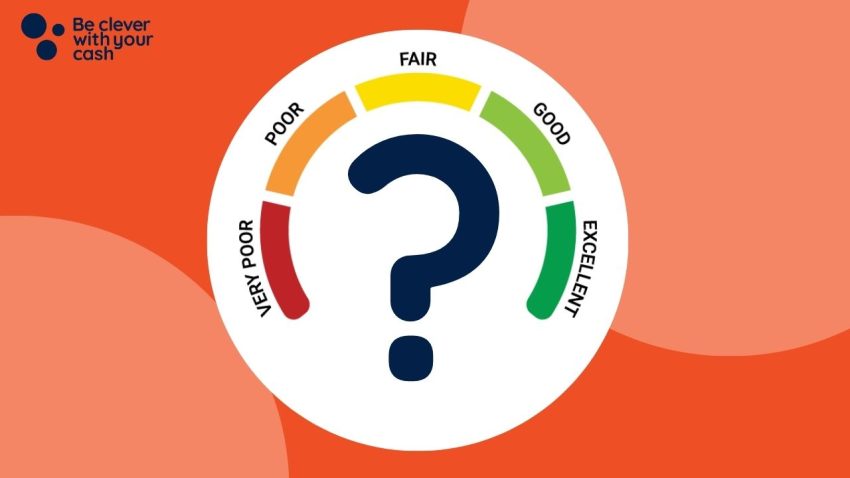
What credit scores are excellent, good, fair and poor?
Here’s how the three different credit reference agencies class each score, as well as their own ranges.
Experian
Experian is the biggest of the agencies. They score out of 999, but are changing to out of 1250 by the end of 2025. Accounts are gradually being moved to the new system from mid-November.
However, some bank apps that show you your Experian score will use the old range, out of 999.
Experian credit score ranges (new system)
- Excellent 1,121-1,250
- Very good 1,001-1,120
- Good 861-1,000
- Fair 641-860
- Low 0-640
Experian credit score ranges (old system)
- Excellent 961-999
- Good 881-960
- Fair 721-880
- Poor 561-720
- Very poor 0-560

What Experian’s changes mean for you
There’s a good chance the new larger range will mean you move up or down a tier. Experian say two in five (42%) will see an increase in score or band.
However, a similar number (44%) will go down a band. The rest will be in the same band but see a lower score (for instance they were 999 on the old system, but aren’t 1,250 on the new one).
The big thing to note here is if your score or band is worse under the new system, it doesn’t actually mean it’ll be any harder to get credit when you apply.
Experian told me that you’ll be able to see if recent action has impacted your new score, so you’ll be able to tell if a drop is down to the new bands or something else.
The new scores also take into account things that previously were missed off. This includes positive actions such as rent payments, overpaying mortgages and clearing an overdraft. Negative impacts that could now be reflected include taking money out with a credit card.
You’ll notice too that Experian has swapped “poor” for “low”. This is because they found the old wording discouraged people from trying to improve their score.
Equifax
Equifax changed their range from 1-700 to 1-1,000 back in 2021.
Equifax credit score ranges
- Excellent 811+
- Very Good 671-810
- Good 531-670
- Fair 439-530
- Poor 0-438
Transunion
TransUnion, which you can access for free through Credit Karma, scores out of 710.
Transunion credit score ranges
- Excellent 628+
- Good 604-627
- Fair 566-603
- Needs work 1-565
What’s an average credit score in the UK?
Experian offers a map where you can break down scores by regions (and age too if you want). For Manchester the average credit score is 743, which ranks as the bottom end of Fair. For Bristol, it’s 805, halfway through Fair, while Tonbridge in Kent comes in at 844, near the top of Fair.
How important is a credit score?
The most important thing to say here is credit scores don’t actually mean anything definitively. They’re an indicator of how good or bad your credit report is (I’ve explained more in this article about credit reports).
But this isn’t the only information lenders take into account. Extra details you provide, such as your salary, could help or hinder your chances of acceptance. In fact, they won’t even see this score, and will create their own version of it based on their own criteria, the info on your credit report and the extra details they have.
Really the number itself is pretty meaningless, except to measure your progress when trying to improve it. If you see it go up you know you’re doing the right things.
If you see it dip then it could be a sign you need to take some actions – though it’ll always fall a little after a new application and will right itself after a while.
Get the best of our money saving content every week, straight to your inbox
Plus, new Quidco customers get a high paying £18 welcome offer

What do the different credit score ranges mean?
Really it’s probably better to look at the category your credit score sites in. Broadly scoring in the different ranges from excellent down to very poor is likely to mean the following:
What an excellent credit score means
Across the agencies “excellent” suggests you’ll probably get accepted for most types of credit and be offered the best rates and deals. But there’s no guarantee and you could still get rejected when you apply.
What a very good credit score means
A “very good” credit score indicates you will usually be accepted for credit, though you might not get the best deals.
What a good credit score means
A “good” score means there is still a decent chance you’ll get accepted but you won’t get the best deals or rates. For example, you might get a lower credit limit or a shorter 0% period. It’s even more important to use soft checks, particularly on credit card applications, to find out who will accept you.
What a fair credit score means
An “average” or “fair” score likely means your options will be more limited, and subject to higher interest rates or lower credit and borrowing limits.
What a poor / low / needs work credit score means
If your score is classed as “low”, “poor” or “needs work” – and it’s likely you’ll be seen as high risk to lend to therefore far less likely to be accepted when applying for credit, or only be able to get products with high interest rates.
 Featured switching deal
 Our top pick
 Customer rating
3.8/5
Customer rating
3.8/5
- Switch bonus£200
- Offer endsUnknown
- Extra bonus£25 Amazon Gift Card
- FSCS Protected? Yes
- Switch bonus requirements Switch using the Current Account Switch Service and close your old account within 60 days of starting the switch
- Deposit requirements Deposit £1,500 in the first 60 days from opening the account
- Direct debits transferred over Set up two Direct Debits before or after the switch from a selected list of household bills
- Existing customers? Can't have held any Santander current account on 1 January 2025
- Restrictions Can't have received a switching bonus from Santander already, offer limited to once per person
- Eligible accounts Open a new or hold an existing Everyday, Edge, Edge Up or Edge Explorer current account
- £25 Amazon Gift Card requirements To qualify for the gift card, you need to complete a full switch using CASS, and make five debit card transactions within 30 days of opening the account.
How to check your credit score
Good news! You don’t need to pay to check your score, or more importantly, your credit report. We’ve written more detail on the free credit report sites here.