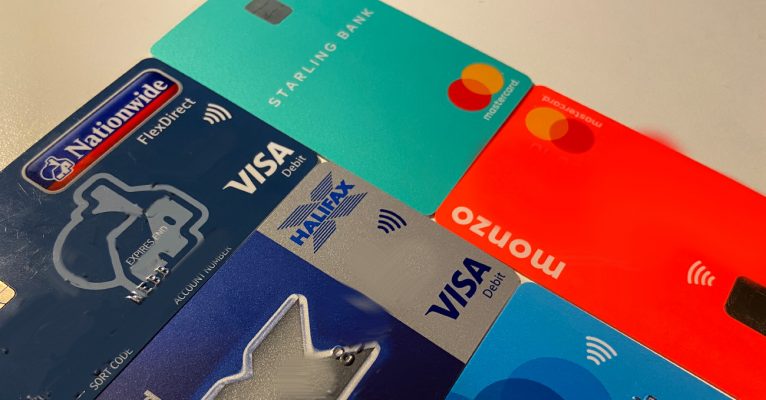


We explain exactly what you have to do and what documents you need to open a bank account in the UK – and what the different sorts of account can offer you
A bank account is an essential product to have, it’s a place where you can receive money – your wages, benefits, pension or money sent from friends and family members – and where you can pay your bills.
There are lots of bank accounts available, from basic accounts where you can send and receive money to premium accounts where you’ll also have access to extra services such as insurance – for a fee.
You can also earn money for opening a new current account, up to £500 in some cases, although it’s only worth doing this if the new account works for you, not just for the free cash.
Here we look at how to open a bank account, what you need to open one, the fees to watch out for, and where to complain if you’re not happy.
Some articles on the site contain affiliate links, which provide a small commission to help fund our work. However, they won’t affect the price you pay or our editorial independence. Read more here.
What bank account do I need?
There are lots of different bank accounts available, here are some of the most common you might come across.
- Basic bank accounts: If you have a poor credit score or a low income, you may not be able to open a standard current account, but you should be able to open a basic bank account. This allows you to pay for services and receive money. You will get a debit card and can set up standing orders and direct debits, there shouldn’t be any fees to pay or minimum amounts to deposit, but you usually won’t get any overdraft facilities or extras either.
- Standard current accounts: There’s a huge range of current accounts to choose from, and many of these have great switching offers for new customers (currently up to £500). They are a step up from the basic accounts and usually offer an overdraft but also require a basic credit check to be passed. There may be certain requirements to opening a current account – such as having to deposit a minimum amount each month or a specific number of direct debits to set up, and fees to pay if you go overdrawn.
- Packaged current account: Lots of current accounts are free, but if you choose a paid-for account you may have access to things like interest paid on cash balances, linked savings accounts, and insurance products.
- Student accounts: These work like standard current accounts, but include student-friendly perks. The most notable of these is an interest-free overdraft to help with bills, but free travel cards, streaming services and other benefits are included to tempt would-be customers.
- Joint accounts: You can open a joint account with your partner, a friend or a family member and they can be a handy way of paying for joint expenses – such as household bills. Just be careful if you’re also getting an overdraft or any other borrowing as you will both be jointly responsible for paying this back.
Get the best of our money saving content every week, straight to your inbox
Plus, new Quidco customers get a high paying £18 welcome offer
What do I need when I open a bank account?
You will need to show some documents when you open a bank account, usually proof of your identification and address.
Banks have to check that the person opening the account is real, and that fraud isn’t taking place, and they do this by checking things like their ID.
This is the case no matter how you apply for the account – online, in a branch, by post or by phone.
Exactly what you need will depend on the account you’re opening but the following are normally required:
- Your details: Name, date of birth, marital status, profession, contact details
- Proof of ID: A passport or driving licence
- Address: Your current address and proof of this, usually with a recent utility bill
- Income: Depending on the account you may need to show how much you’re paid or how much you usually receive each month in income
 Featured switching deal
 Our top pick
 Customer rating
3.8/5
Customer rating
3.8/5
- Switch bonus£200
- Offer endsUnknown
- Extra bonus£25 Amazon Gift Card
- FSCS Protected? Yes
- Switch bonus requirements Switch using the Current Account Switch Service and close your old account within 60 days of starting the switch
- Deposit requirements Deposit £1,500 in the first 60 days from opening the account
- Direct debits transferred over Set up two Direct Debits before or after the switch from a selected list of household bills
- Existing customers? Can't have held any Santander current account on 1 January 2025
- Restrictions Can't have received a switching bonus from Santander already, offer limited to once per person
- Eligible accounts Open a new or hold an existing Everyday, Edge, Edge Up or Edge Explorer current account
- £25 Amazon Gift Card requirements To qualify for the gift card, you need to complete a full switch using CASS, and make five debit card transactions within 30 days of opening the account.
What happens when you open a bank account?
Once you’ve chosen a bank account you’d like to open, and you’re confident you meet the requirements of the account, you will need to apply for it. You can do this online, via an app, in a branch, by post, or by telephone, depending on the account.
The process for opening a bank account usually goes like this…
- You will need to give the details requested to the bank
- It will carry checks out to make sure you meet its requirements (including a credit check in some situations)
- If you’re accepted, your bank account will be opened and you’ll be sent a debit card and PIN
- Once the account is open you’ll be given an account number and a sort code and can start sending and receiving money straight away.
- If you’re waiting for a switching incentive, there may be an initial period before this is paid out.
You may need to pass a credit check to open a bank account
You may need to pass a basic credit check if you’re opening a current account with an overdraft. This is so the bank can assess how risky it is to them to give you this money to borrow. If you have a poor credit score you could choose an account without an overdraft or a basic bank account instead.
How much will it cost to open a bank account?
Basic bank accounts are free and so are lots of current accounts but you may have to pay for some packaged bank accounts or premier accounts.
Before you sign up to a paid-for account, it’s important to look at what’s included for the fee. You may be given access to insurance, for example, or fraud protection services. But it’s only worth switching to an account like this if you’ll use the extra things included and that you can’t get them cheaper elsewhere.
While you may be able to open an account for free, there are also fees to watch out for. These could be applied for:
- Going into your overdraft
- Making a late payment
- Using your debit card abroad at an ATM or to make a purchase
How to switch your bank account
If you’re switching bank accounts, you can use the free Current Account Switch Service (CASS). It will automatically switch your bank account over, including any direct debits or standing orders that are in place. It also guarantees that if you are charged anything for a missed payment during the switch, this will be refunded to you.
Once you’ve initiated the switch, it will then take seven working days to complete.
How to complain if you’re not happy
If you have a problem with your bank account or provider, such as you’re charged a fee you don’t think is fair, you can complain. In the first instance you’ll need to make a complaint with the bank itself.
If, after eight weeks, it hasn’t responded to you or you’re not happy with the response, you can go to the free Financial Ombudsman Service (FOS). It is an independent organisation and it can look into your complaint. If it finds the bank to be in the wrong, it may ask it to put things right, and this could include paying you if you’ve lost out on interest or if you’ve incurred fees.
FAQs
Which bank account is easiest to open in the UK?
Basic bank accounts are open to almost everyone and can be opened quickly and easily. However, they are very simple accounts and won’t include things like an overdraft or any extra features such as cashback on purchases or interest paid on balances.
They are offered by Barclays , the Co-operative Bank, HSBC, Lloyds Banking Group (including Halifax and Bank of Scotland), Nationwide Building Society, NatWest Group (including Royal Bank of Scotland and Ulster Bank), Santander , TSB and Virgin Money.
Do I need to go into a branch to open a bank account?
You may be able to open a current account via an app, an online website, by letter or by phone. It all depends on the bank account and provider you’ve chosen. It’s usually quicker to open an account online or via an app as it can be automatically set up if you pass all the requirements.
Can I open a bank account without a permanent address?
You can open a bank account without a permanent address in some cases. Some banks, including HSBC, offer ‘No Fixed Address’ accounts in connection with homelessness charities. Often with these accounts the address listed on the bank account will be a bank branch or a post office.
Can I open a bank account without photo ID?
You may be able to open a bank account without photo ID but you will usually need to show something else to prove who you are, such as a birth certificate or a recent utility bill.